Few problems on the water are as common, or as serious, as a boat overheating. An overheating boat engine can go from a warning light to major damage in minutes. The good news is that most cases trace back to a short list of causes, and many are easy to fix.
This guide explains why a boat engine overheats, what to do the moment it happens, and how to keep it from happening again.
Signs of an Overheating Boat Engine
Catching the problem early can save your engine. Watch and listen for these warning signs:
- A temperature gauge climbing above the normal range
- A high-temperature alarm or horn
- Steam or smoke from the engine compartment
- Weak or no water coming out of the exhaust or tell-tale
- A drop in power or an engine that stumbles
- A hot, burning, or sweet smell (coolant)
How Boat Engine Cooling Systems Work
To avoid your boat overheating, it helps to know how the engine stays cool. Most boats use one of two systems.
Raw water cooling pulls water from the lake, river, or ocean. A pump sends it through the engine block and out with the exhaust. It is simple, but the water can carry sand, salt, and debris.
Closed (freshwater) cooling works like a car. A coolant mix circulates inside the engine. A heat exchanger uses raw water to pull heat out of that coolant.
Either way, the engine needs a steady flow of water to shed heat. When that flow stops or slows, the engine overheats fast.
Boat Engine Cooling System Guide
10 Common Causes of an Overheating Boat Engine
1. Blocked Raw Water Intake
The intake is the front door of your cooling system. Weeds, plastic bags, mud, and marine growth can block it. Shallow water and sand can also clog it.
A blocked intake is a top cause of an overheating boat engine, especially after running in shallow or weedy water.
2. Worn or Failed Impeller
The impeller is a rubber paddle wheel inside the water pump. It pushes water through the system. Over time, the vanes crack, harden, or break off.
Running a pump dry, even for a few seconds, can destroy an impeller. Most manufacturers recommend replacing it every one to two years, or sooner with heavy use.
3. Clogged Strainer or Hoses
Salt crystals, sand, and debris can restrict the intake strainer and cooling hoses. Old hoses can also collapse inward or soften and kink. Either problem limits water flow.
4. Stuck or Failed Thermostat
The thermostat controls how much coolant flows through the engine. If it sticks closed, coolant cannot circulate, and the engine runs hot.
Thermostats are cheap and simple to replace. Many mechanics swap them during routine service.
5. Low Coolant Level
On closed-cooling engines, low coolant means less heat is carried away. Leaks, loose clamps, and worn hoses are common reasons the level drops.
Check the coolant before every trip. Use the type your engine maker recommends.
6. Clogged Heat Exchanger or Exhaust Manifold
Salt, scale, and corrosion build up inside the heat exchanger and exhaust manifold. This restricts flow and reduces cooling.
Saltwater boats are especially at risk. Flushing the system and cleaning these parts on schedule helps prevent buildup.
7. Loose or Broken Drive Belt
On many engines, a belt turns the water pump or circulation pump. A loose, glazed, or broken belt means the pump slows or stops.
Inspect belts for cracks, fraying, and proper tension at the start of each season.
8. Air Leaks in the Cooling System
Air in the system blocks water flow. A loose hose clamp or cracked fitting on the suction side can let air in. This can cause overheating that seems to come and go.
9. Blown Head Gasket or Internal Damage
A failed head gasket can let combustion gases into the coolant. Signs include white exhaust smoke, milky oil, and bubbles in the coolant.
This is a serious repair. If you suspect it, stop using the engine and call a marine mechanic.
Read Next: How to Choose a Marine Mechanic<
10. Overloading or Running Too Hard
Heavy loads, a fouled hull, a bent or wrong-size prop, or long runs at full throttle make the engine work harder. That creates more heat than the cooling system can handle.
A dirty bottom adds drag. Keeping the hull and prop clean helps the engine run cooler.
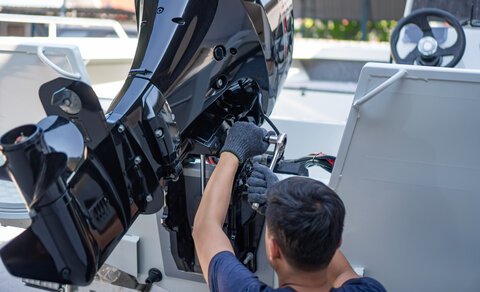
What to Do If Your Boat Engine Overheats
Stay calm and follow these steps. Quick action can prevent expensive damage.
- Reduce throttle right away: Bring the engine down to idle.
- Shift to neutral: Let the engine idle for a moment and watch the gauge.
- Shut off the engine: Turn off the engine immediately if the temperature does not drop or an alarm keeps sounding.
- Check for water flow: Look for water from the exhaust once you restart briefly, if it is safe.
- Do not open a hot coolant cap: Pressurized coolant can cause serious burns. Wait until the engine cools.
- Check the intake: If it is safe, look for weeds or debris around the water inlet.
- Call for help if needed: If you cannot find the cause, ask for a tow rather than risk engine damage.
Never keep running an engine that is still overheating. Even a few minutes can warp heads and seize pistons.
Outboard vs. Inboard vs. Sterndrive: Does It Matter?
The causes are similar across engine types, but some issues show up more often on certain setups.
- Outboards: Watch the tell-tale stream, which is a small stream of water that shows the pump is working. Clogged water passages are common.
- Inboards and sterndrives: Raw water strainers, heat exchangers, and impellers are frequent trouble spots.
- Jet drives: Debris can clog the intake grate and cooling lines, especially in shallow water.
Check your owner's manual for the cooling layout and service intervals for your engine.
How to Prevent Boat Overheating
Most overheating problems are preventable with simple habits.
- Check the tell-tale or exhaust water every time you start the engine
- Replace the impeller on schedule, and keep a spare on board
- Inspect hoses, clamps, and belts before each season
- Flush the engine with fresh water after every saltwater trip
- Check coolant levels before each outing
- Clean the strainer and intake regularly
- Replace the thermostat during routine service
- Keep the hull and prop clean to reduce engine load
- Watch the gauges and learn what normal looks like for your boat
A yearly service by a qualified marine mechanic can catch worn parts before they fail on the water.
Items to Keep on Board
A few spare parts can turn a trip-ending problem into a quick fix:
- Spare impeller and gasket
- Spare belts
- Extra hose clamps and a short length of hose
- Spare thermostat (if your engine allows easy swaps)
- Basic hand tools
- Extra coolant
Also carry a VHF radio or phone, an anchor, and tow coverage in case you cannot fix the issue on the spot.
When to Call a Marine Mechanic
Some fixes are simple. Others are not. Call a professional if:
- The engine overheats again after you clear the intake and replace the impeller
- You see milky oil, white smoke, or coolant in the oil
- The engine has been run hot for an extended time
- You are not comfortable working on the cooling system
Early repairs cost far less than a rebuilt or replaced engine.
Final Thoughts
An overheating boat engine is stressful, but it does not have to ruin your day. Know the warning signs, act fast, and check the usual suspects first: intake, impeller, thermostat, and hoses.
With regular maintenance and a few spare parts on board, you can keep your engine cool and your time on the water worry-free. If the problem keeps coming back, a marine mechanic can find the root cause before it becomes a costly repair.
Boat Engine Overheating: Frequently Asked Questions
Q: Why does my boat engine overheat only at high speeds?
A: This often points to a restricted water supply. A partly clogged intake, worn impeller, or restricted hose may pass enough water at low RPM but not at full throttle. A dirty hull, damaged prop, or heavy load can also push the engine past what the cooling system can handle. Start by checking the impeller and intake.
Q: Can I keep driving my boat if the engine is overheating?
A: No. Reduce power, shift to neutral, and shut the engine down if the temperature stays high. Continuing to run an overheating boat engine can warp cylinder heads, blow a head gasket, or seize the engine. If you cannot fix the cause, call for a tow.
Q: How often should I replace my boat's impeller?
A: Most manufacturers suggest every one to two years, or every 100 hours of use. Replace it sooner if you run in sandy, shallow, or debris-filled water, or if the engine has run dry. Always check your owner's manual for the schedule for your engine.