
First Time Boat Buyer FAQs
A: If you already enjoy spending time on the water—whether with friends or through a boat club—you may be ready to own your own boat.
Unlike when you buy a car, when you buy a boat you are buying more than a vehicle. You are buying a lifestyle—one that you can tailor to your needs and that opens the door to a whole new world of fun, freedom and community.
A: You need to have a clear idea of what you want to do, where you want to boat, who you will be boating with, and your boating budget. These factors will guide everything from boat type to size and budget.
Are you a thrill seeker? An adrenaline junkie? Are you looking for weekend escapes or week-long adventures? Do you picture yourself catching air or outwitting fish? Are you someone who has a passion for one activity—or do you like to mix it up?
Defining your boating style is a great way to determine what type of boat is right for your lifestyle. Our Boat Finder can help.
A: It’s a common question, and there is no one-size-fits-all answer. If you’re just getting started the options—from bowriders to pontoons, jet boats to cabin cruisers, wake sport boats to trawlers—may feel overwhelming. But choosing the right boat is just a matter of focusing on what you want to do on the water, where you will be boating and who will be with you.
First, what boating activities do you enjoy? Many boats are versatile enough for you to pursue multiple activities, but if you’re particularly passionate about one, you may want to look for a boat designed for your favorite activity.
How many people will you be boating with? Knowing that number will help you determine what size boat you need.
Where you boat will also play a factor in your decision. Smaller craft are suitable for small lakes and rivers, but for large lakes, coastal and ocean boating you’ll need a larger, more stable craft.
Will you be trailering your boat? If so, you’ll need to consider the trailering capacity of your car or truck. Does the boat need to fit in your garage? Or can you park it your driveway or yard.
A: Owning a boat means you can go boating whenever you want—whether it’s for a few hours or a few days.
While peak boating season spans Memorial Day to Labor Day, it’s a common misconception that you can only use a boat during the summer months. There are plenty of good boating days in spring and fall. In fact, boating during the “off-season” offers less crowded waterways, stunning scenery, and even better fishing, if that’s your thing.
You may feel like you’re too busy to make time for another activity—but the benefit of boating is it lets you get away, whenever you want. Leaving the dock and leaving your daily worries on shore can make a 2-hour outing feel as refreshing a weekend getaway. Boating is also the ideal way to share time with family and friends.
If you really feel time-strapped, rentals and boat clubs can help you find time for boating, offering a “walk-on, walk off” boating experience. They’re also a great way to try different types of boats before you buy.
A: As a new boater, you probably wonder where to keep your boat when it’s not in use. Key considerations for storing a boat include cost, convenience, protection from the elements, security, and seasonal maintenance.
If you have a trailerable boat and space in your garage, driveway, or backyard, the most cost-effective and convenient options is to store it at home. Be sure to check for local zoning regulations or HOA rules regarding parking boats on your property.
If you’re not going to store your boat at home, you’ll want to choose a storage location near your home or favorite boating spot. Options include in-water (slips) at a marina, outdoor dry storage and indoor storage. For winter storage or any long-term, nonuse storage, boatyards and marinas offer storage inside and outside at varying rates. Be sure the facility offers security, such as fencing, cameras or security guards. Use a boat cover or protect it from the elements.
Storing your boat at home during the boating season and using professional/indoor dry storage during the off-season is a good option that offers both in-season convenience and off-season protection from the elements.
A: The initial purchase price is not the only cost to consider when you are planning your boating budget. Like a car the cost of ownership also includes fuel, maintenance and insurance, as well as registration costs (for the boat and trailer). You’ll also need to factor in the costs associated with storage, safety gear and accessories.
A: While boat insurance is not generally required by law in most states, boat insurance offers a safety net should something go wrong. If you are financing a boat your lender will most likely require full coverage. Most marinas require liability insurance, at minimum, if you want to rent a slip or dock your boat.
Insurance protects your boat from accidents, damage or theft and provides liability protection if you are responsible for an accident. Another key reason to buy boat insurance is the costs of wreckage removal and fuel spill liability—both of which can be legally required and expensive.
It helps to think about insurance not only in terms of what it costs, but what you have to lose. Boat insurance protects your investment, protects you from liability and offers peace of mind so you can enjoy your time on the water.
A: There’s something about being on the water—a sense of freedom, connection and relaxation that you just can’t replicate on land. Boating offers connection, community, and adventure. There’s no better way to connect with a community of like-minded people and build lifelong memories.
Boating supports both mental and physical health. The sight and sound of water have been shown to reduce the stress hormone cortisol and boost feel-good neurochemicals like serotonin and dopamine. Being outside in the fresh air offers exposure to sunlight that your body needs to process Vitamin D and strengthen bones and boost immunity. Speaking of strength, the constant sway and pitch of a boat on the water also engages your core to help you maintain balance, while steering, docking and handling lines provide low-impact muscle work.
A: Once you’ve made the decision to buy a boat, the next choice to consider is whether to buy new or pre-owned. There are pros and cons to both options. To determine what will work best for your lifestyle and budget here are some things to consider.
While new boats cost more, you generally will be able to finance with lower rates, longer terms and a lower down payment. Pre-owned boats can be had for lower cost, which can free up money for gear or a larger vessel. Depreciation is also less of a factor for pre-owned boats.
Buy new if the latest designs, cutting-edge tech, the ability to customize, reliability and the peace of mind that comes with a warranty are priorities for you. Not to mention the “bragging rights” of pulling up to the dock in a factory fresh boat.
Buy used if cost is a factor, you’re willing to manage higher maintenance costs, and want to avoid depreciation. Buying pre-owned can stretch your boating budget, enabling you to get a bigger or better-equipped boat. The pre-owned boat market is generally larger than the new boat market, so you’ll have lots of options to choose from. Some boat warranties are transferable to a second owner, so be sure to investigate that.
When comparing new and used boats, one is not better than the other. Rather, each offers benefits that the other does not. It’s up to you to decide in which camp you are more comfortable.
A: You don’t need a lot of boating experience to buy a boat, but you do need to be prepared for a learning curve. Renting or joining a boating club is a good way to “get your feet wet”, master the basics and test different types of boats. Taking a boating course—both online and on-water courses are available—is one of the best ways to become familiar with the boating “rules of the road” and gain confidence on the water.
A: Just like a car, the cost of a boat will depend on its size, add-ons, and accessory package. Because boats are more specialized than cars, you can pay a premium for boats that are built for specific activities. But the good news is, there are boats for every budget and every lifestyle. Financing can make buying a boat even more affordable.
A: Boats can be financed just like a car. Marine lenders, dealerships and credit unions all offer marine financing. Terms generally range from 10–25 years. Financing is available for both new and pre-owned boats, although interest rates and down payments are generally lower for new boats.
A: Like any mechanical vessel, regular maintenance will keep your boat in ship shape and is key to worry-free outings. Proper maintenance, including pre-launch inspections and seasonal upkeep, will also extend your boats lifespan and preserve the value of your investment.
Typical routine maintenance tasks include engine oil changes, propeller/drive system checks, hull cleaning/waxing, and battery care. When your boat is in regular use, weekly maintenance includes cleaning to prevent the buildup of salt or dirt, checking the bilge pump and safety gear.
At the end of the season, you’ll need to winterize your boat to protect its engine and system from freezing. Prior to launch at the start of the boating season, you should prep your boat by following a spring commissioning checklist to ensure all systems are in good working order.
A: Boat license regulations vary by state. However, most require proof that you’ve completed a state-approved boating safety education course. The term boating license is often used interchangeably with boater education card or boater education certificate.
Boaters’ education and license courses and testing can be completed online. If you successfully pass the test, you will be issued your license or card. Unlike a car, you will not be required to complete an on-water driving test.
One thing to note if you plan to trailer you boat and travel out-of-state for your boating adventures—boater education cards issued for courses approved by the National Association of State Boating Law Administrators (NASBLA) are generally valid in all states.
Regardless of whether your state requires a license, taking a boating safety and education course is the best way to gain confidence on the water and enjoy boating safely.
A: You can buy a boat at a boat dealership, a boat show, directly from a manufacturer, online marketplaces, or from a private seller. Each option has advantages and considerations—the best choice for you will depend on your needs and comfort level.
As a new boater, buying from a dealership means you’ll enjoy support after the sale, including expert guidance, service and warranty support. Dealers can also help you secure financing.
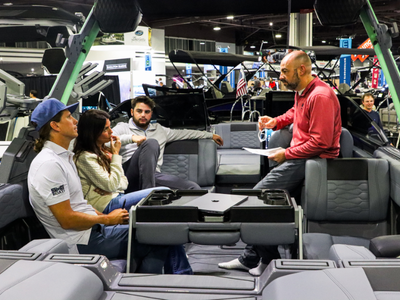
Boat shows let you see, board and compare hundreds of boats, brands and models in person, as well as chat with dealers. At a boat show, dealers will also be competing for your business, so you’ll also be able to take advantage of show specials and discounts, and even secure financing.
Buying directly from a manufacturer is much like buying from a dealer, although most larger manufacturers will refer you to a local dealership.
Online marketplaces let you browse hundreds of boats from home and offer competitive pricing. However, you won’t get to see the boat in person and after-purchase service isn’t usually included.
If you’re buying a pre-owned boat, be sure to get a marine survey to assess the boat’s condition, safety and value, so you can make an informed buying decision.
A: You will need all legally required safety gear, including life jackets, flares, fire extinguishers, a first aid kit and sound devices. You boat must also be equipped with navigation lights for visibility at night or in low-light situations. For docking and anchoring you’ll need boat fenders (bumpers), dock lines to tie off at the dock, and anchor sized for your boat and anchor lie sufficient for the depth of the waters where you’ll be boating.
Not required, but recommend gear includes a boat hook for pushing off or retrieving items from the water, first aid kit, tool kit, marine VHF radio and a paddle or oar.
Once you’re equipped with the necessities, you’ll want to think about the extras that make life aboard easier and take you boating to the next level. These include a GPS or chartplotter, a cooler, a drybag to keep gear like phones and clothing dry, and towels. And of course, you’ll want to stock up on gear related to your favorite onboard activities such as fishing, tubing, wakeboarding, skiing. etc.
A: As a novice buying your first boat, key factors to consider are size, engine type, features and intended use. Look for something in the 16–21 ft. range with an outboard motor, which are generally easier for beginners to maintain. Opt for a design with simple, user-friendly operation rather than an advanced, complex system. Finally choose a model based on how you intend to spend most of your time on the water—for example fishing or cruising. Pontoons, aluminum fishing boats, bowriders, and deck boats are great starter boats. They’re versatile, easy to handle, tow and maintain, and are affordable—the perfect combination for fun and safe boating adventures that will build your confidence on the water.
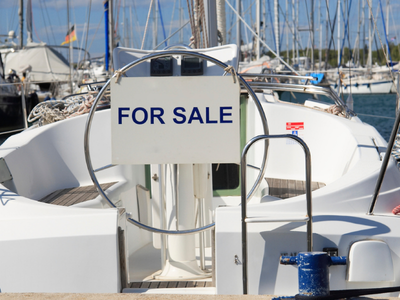
What are the Costs of Boating?
Ready to make boating part of your lifestyle? Use our Boat Loan Calculator to estimate monthly payments, explore financing options, and see what boat fits comfortably within your budget.
What does Maintenance Look Like?
Keep your boat running smoothly season after season. Explore our boat maintenance tips and resources to learn the basics of care, upkeep, and routine checks.
Learning the Ropes
A: Learning to operate a boat safely requires a combination of training and hands-on practical experience. Understanding how a boat handles is essential, because operating on the water is fundamentally different from driving on land. Unlike a car, a boat pivots from the stern, has no brakes and require you to manage momentum to perform basic maneuvers like docking, reversing, or handling wind and currents.
Start by completing a certified boating safety course to learn navigation rules, safe boating practices and legal requirements. Taking an on-water course is the best way to get practical experience and gain confidence at the helm.
A: Owning a trailerable boat gives you the freedom to explore new locations and discover new adventures, whether just across town or across the country. The type of vehicle you will need depends largely on the size and weight of your boat.
At minimum, your vehicle must be capable of towing at highway speeds and handling steep boat launch ramps. Its towing should exceed the total weight of the boat, motor fuel and trailer.
Typically, a truck or a large SUV with a V-6 or V-8 engine is well suited for the job. Look for key features such as high torque, a sturdy frame and a towing capacity that comfortably exceeds your total load.
Modern trucks and SUVs often include towing-friend technologies such as backup cameras with hitch assist or tow/haul mode that can make towing easier and improve performance. If you’re in the market for a new vehicle, consider models with dedicated tow packages to enhance capability and safety when towing.
A: Before heading out on the water, be sure you know what to do in the event of an emergency. If you find yourself stranded, keep calm and assess the situation. Make sure everyone aboard is safe and wearing a life jacket. Drop anchor to keep your boat from drifting, determine you location using GPS, a chartplotter or your phone. Use a VHF marine radio to call for help—Channel 16 is the emergency channel. If you cannot reach anyone, use visual signals like flares, an orange flag, or wave your arms to alert nearby boaters. Stay with your boat unless is sinking and wait for help.
A: As a new boater, having access to reliable, unbiased information can help you build confidence in your boating skills and make the most of your time on the water. Fortunately, you’ve found us. Think of Discover Boating as your go-to resource for all things boating—with information and advice on everything from getting started, to buying a boat, to owning and operating, activities, places to boat and more.
Other trusted resources include BoatUS Foundation which offers free online boating safety courses, and the National Oceanic and Atmospheric Administration (NOAA) that offers free resources for boaters. The United States Power Squadrons®’ America’s Boating Club has more than 300 chapters nationwide that provide boating courses, on-water training, vessel safety checks and social activities for its members.
Find Your Perfect Boat
Ready to find the boat that’s right for you? Use our Boat Finder tool to explore different options and get personalized recommendations based on your lifestyle, budget, and boating goals.