Ask any seasoned angler about fishing by the moon, and you'll probably get a story. A monster catch under a full moon. A dead-slow day when the tides were off. A buddy who won't leave the dock without checking the lunar calendar first.
So, is there anything to it? Many anglers believe the moon changes when and how fish feed, and there's real science behind part of that. Moon phase shapes tides, currents and nighttime light, all of which influence fish behavior.
Here's how the moon can affect your next trip, and how to use it to your advantage.
Does the Moon Affect Fishing?
The moon's gravity pulls on the ocean and creates tides. Tides move water, bait and predators around.
When water moves, fish tend to feed. When it goes still, they often slow down.
That's why the moon matters most in saltwater, bays and tidal rivers. Many anglers also swear by it in lakes, though the effect is harder to measure.
How Does Moon Phase Affect Fishing?
Moon phase changes tide strength and nighttime light. Here's how each phase typically plays out:
- New moon: Strong tides and very dark nights. Fish often feed hard during the day.
- First quarter: Weaker tides, called neap tides. Fishing can be slower and more subtle.
- Full moon: Strong tides and bright nights. Many species feed at night and slow down by day.
- Last quarter: Weaker tides again. Early mornings and evenings are often best.
The new and full moons create spring tides, which have nothing to do with the season. They bring the highest highs and lowest lows, plus faster current.
Read Next: Types of Fish and Where to Find Them
Does a Full Moon Affect Fishing?
A full moon affects fishing in two main ways.
1. Stronger tides: More current pushes baitfish around and sets up feeding lanes.
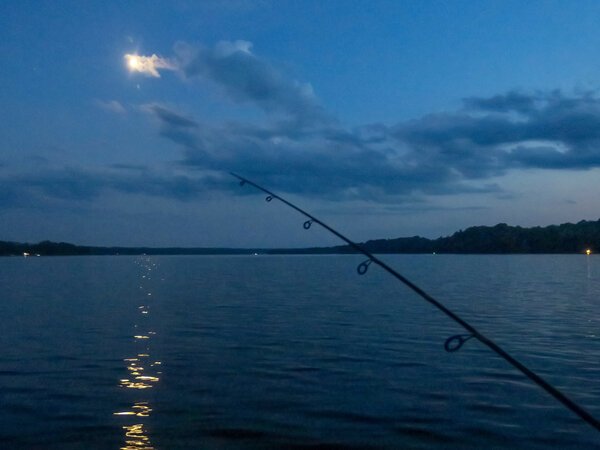
2. Brighter nights: Fish can see better after dark, so many feed at night instead of during the day.
The result is often a trade-off. Night fishing can be excellent, while midday bites may be slower.
Some anglers also notice that fish seem pickier under a bright moon. Clear, lit-up water makes them more cautious, so lighter line and natural presentations can help.
Does a Full Moon Affect Fishing in Freshwater?
The effect is less clear in lakes and ponds. There are no real tides, so the moon's pull matters less.
Light still plays a role. Species like walleye, catfish and largemouth bass often feed more actively on bright nights.
Weather, water temperature and barometric pressure usually matter more than moon phase in freshwater.
What Is Solunar Theory?
Solunar theory is a popular fishing guide built around the moon. It says fish feed most during certain windows each day:
- Major periods: When the moon is directly overhead or directly underfoot. These last about two hours.
- Minor periods: At moonrise and moonset. These last about an hour.
Solunar tables are easy to find online and in fishing apps. They're a handy planning tool, but they're not a guarantee.
Tips for Fishing by the Moon
Use the moon as one factor, not the only one.
- Check the tide chart first: Tide timing often matters more than the moon phase itself.
- Fish moving water: Incoming and outgoing tides beat slack tide.
- Try night trips around a full moon: Bright nights make it easier to see and safer to navigate.
- Focus on dawn and dusk: Low light plus moving water is hard to beat.
- Keep a log: Note the moon phase, tide and your catch. Patterns show up fast.
- Don't skip a trip over the moon: Fish still bite in every phase.
Read Next: Fishing Journal Guide
Other Factors That Matter
The moon is only part of the picture. These conditions often have a bigger impact:
- Water temperature
- Weather and barometric pressure
- Time of day
- Wind and current
- Season
- Bait availability
The best days line up several of these factors at once.
Final Thoughts
The moon does influence fishing, mainly through tides, current and light. It's a useful tool, but not a magic switch.
Pair moon phase with tide charts, weather and time of day, and you'll put yourself in the right place at the right time.
Frequently Asked Questions
Q: What is the best moon phase for fishing?
A: The new moon and full moon are usually the best phases for fishing, especially in saltwater. Both create strong spring tides and faster currents. Fish tend to feed more actively when water is moving.
Q: Is fishing better on a full moon or new moon?
A: Neither is always better. A new moon often means stronger daytime bites because nights are dark and fish feed by day. A full moon often means better night fishing because brighter conditions help fish hunt after dark. Choose based on when you plan to fish.
Q: What time is best to fish during a full moon?
A: Night fishing is often the best choice during a full moon, particularly around moonrise and moonset. Early morning and late evening can also be productive. If the daytime bite is slow, try shifting your trip to after dark.