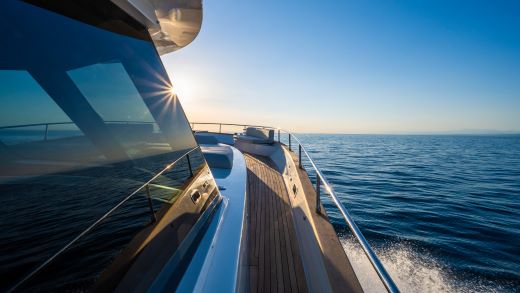
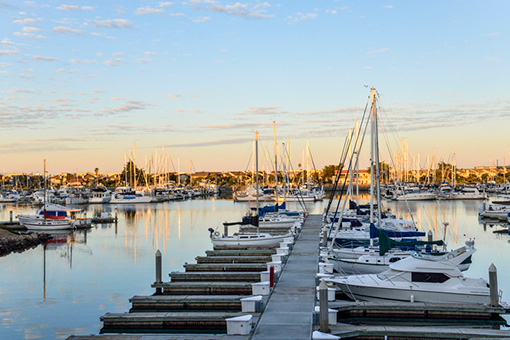
Big boats can open up a different kind of boating life. They give you more room to stretch out, more comfort on longer trips, and more options for cruising, offshore fishing, overnighting, or spending full weekends on the water. If you’re thinking about moving up, the smart approach is to match the boat to your budget—and your experience at the helm.
What Counts as a Big Boat?
There’s no single cutoff that every boater uses, but “big boat” usually means more than just length. It often refers to a boat with more onboard systems, more passenger space, and more capability than smaller day boats.
For NMMA certification, a yacht is a boat that is 26 feet or larger. In the broader boating world, many people start using the yacht label once boats reach roughly 33 to 40 feet and have features like sleeping space, an enclosed head, and longer-range cruising capability.
How Do Big Boats Compare to Small Boats?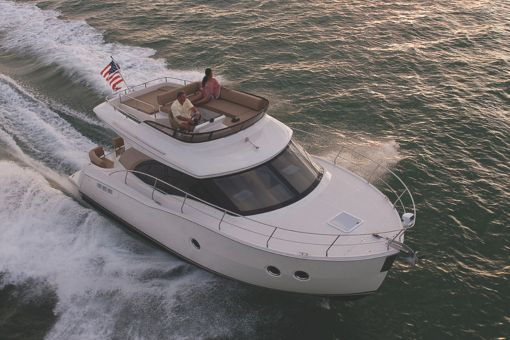
Big boats are bigger than smaller boats, but they also usually offer a smoother ride in rougher water, more room for passengers and gear, and more amenities for longer days or nights aboard.
Small boats are often easier to launch, trailer, store, fuel, and dock.
A larger boat may also be built for a very different purpose. Some are made for offshore runs. Some are set up for entertaining. Others are built for long-distance cruising.
By comparison, smaller types of boats like deck boats, a pontoon boat, a fishing boat, or a sort boat are often focused on day use, shallow water access, or simple ownership.
What Types of Big Boats Are There?
Here are some common types of big boats and where they fit best:
- Cabin Cruisers: Good for weekend cruising and overnighting. Cabin cruisers usually have a berth, a head, and basic galley features.
- Motor Yachts: Built for comfort, longer stays aboard, and entertaining. These boats offer space and amenities, but ownership costs can climb fast.
- Center Console Boats: Larger center console boats are popular for offshore fishing and fast day trips. Their open layout is practical, though they may offer less weather protection than a cruiser.
- Catamarans: These twin-hull boats are known for stability, wide deck space, and roomy layouts.
- Trawlers: A strong fit for cruising and liveaboard plans. Many use displacement hulls, which are designed to move through the water efficiently at slower speeds.
- Sailing Yachts: Best for boaters who enjoy the sailing experience and want overnight or cruising capability.
- Sport Fishing Boats: These offshore fishing boats are designed for anglers who want cockpit space, fishing features, and range for serious trips offshore.
A Quick Note on Hulls
Some boats are designed with a deeper V-shaped hull for rougher water, while others may have a flatter running surface for different handling goals. A flat bottom or shallow-water-friendly setup may work well in protected areas, but it won’t serve every offshore need. The right hull shape depends on where you boat most often.
What Are the Pros and Cons of Owning a Big Boat?
Big boats offer real advantages over small boats:
- More stability and comfort in larger water
- More seating, storage, and living space
- Amenities like enclosed heads, cabins, and galleys
- More versatility for cruising, entertaining, overnighting, and some water sports
- Better fit for offshore plans and longer trips
They also come with trade-offs:
- Higher purchase price
- More fuel consumption
- More maintenance and more systems to manage
- Greater handling complexity
- Tighter maneuvering in marinas and around docks
- Limited trailerability for many models, which can push you toward slips or storage facilities
What Should You Consider Before Buying a Big Boat?
Before you buy a big boat, think about how you’ll actually use it. A family focused on day trips and tubing may want something very different from a buyer planning offshore fishing or multi-day cruising.
A few questions can help narrow it down:
- Where do you plan to boat most often: lakes, bays, coastal water, or offshore?
- Do you want to entertain, fish, cruise, or stay overnight?
- Will you keep the boat in a slip, dry stack, or on land?
- How much time and money are you ready to put into upkeep?
- How comfortable are you with docking, navigation, and larger onboard systems?
If you’re still comparing options, Discover Boating’s Boat Finder and Boat Buyer’s Guide can help.
What Experience Do You Need to Operate a Big Boat?
A bigger boat doesn’t always mean a special license, but boating rules vary by state. You may be required to complete safety education depending on age, location, or vessel type.
Bigger boats also bring more responsibility. There may be twin engines, shore power, larger navigation systems, and more moving parts to learn.
That’s why experience should factor into boat size. For many first-time boat owners, a modest cabin cruiser or a manageable center console can be a smarter starting point than jumping straight into a large motor yacht.
A boating safety course, hands-on instruction, and time spent practicing close-quarters docking can make the move up feel much more comfortable.
Is a Big Boat Right for Your Lifestyle?
A big boat makes sense if you want more comfort, more capability, and more time aboard. It can be a strong fit for overnighting, cruising, offshore fishing, or hosting family and friends.
If most of your boating happens on smaller water and short day trips, a smaller boat may be easier to own and use more often. The best choice is the one that fits your boating life, not just your wish list.
Big Boat FAQs
Q: What Are the Most Popular Types of Big Boats?
A: Cabin cruisers, motor yachts, center console boats, catamarans, trawlers, sailing yachts, and sport fishing boats are among the most popular options because they support different boating goals, from cruising to offshore fishing.
Q: Can You Recommend Some Big Boats For First-Time Owners?
A: For many first-time owners, a smaller cabin cruiser or a manageable center console is a practical first step. Both can give you more room and capability without the added complexity of a much larger yacht.
Q: What Should I Consider Before Buying A Big Boat?
A: Focus on the cost of ownership, fuel use, maintenance, storage, where you plan to boat, and how much experience you have with larger boats. A boating course and a sea trial are both worth your time before you commit.