If you fish both skinny backwater flats and open coastal water, you’ve probably hit the wall that comes with choosing one boat for both. Bay boats are great in the shallows but can feel limited past the inlet. Offshore center consoles handle big water but can’t follow you into shallow, skinny water. That’s the gap a hybrid fishing boat is built to fill.
What Is a Hybrid Fishing Boat?
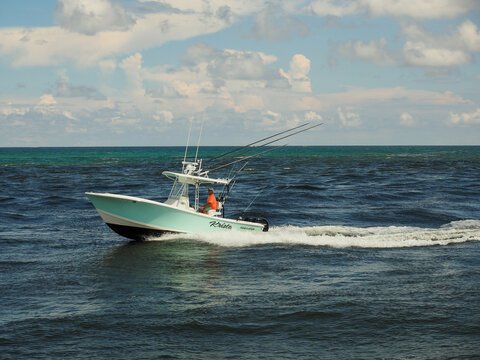
A hybrid fishing boat blends a traditional bay boat's shallow-water access with the hull design and rough-water capability of an offshore center console. Many people call it a hybrid bay boat, or just a “hybrid bay.”
The idea is simple: one boat for inshore and nearshore fishing. You can pole or run a trolling motor along a grass flat in the morning, then head through the inlet for bottom fishing or trolling that afternoon.
Read Next: Shallow Water Boating Tips
Hybrid Boat vs. Bay Boat: What’s the Difference?
The biggest difference is hull design. Traditional bay boats use a flatter hull with a lower deadrise, which keeps draft shallow and the ride stable at rest. The tradeoff is a rougher ride in chop and less confidence when conditions build.
Hybrid hulls add a sharper entry and more deadrise, so they cut through waves instead of slapping over them. They still keep draft low enough for skinny water. Compared with a traditional bay boat, you generally get:
- A drier, softer ride in chop
- More confidence venturing offshore
- Higher freeboard and a more robust build
- Slightly deeper draft than a pure flats boat
Compared with an offshore center console, a hybrid gives up some top-end rough-water ability in exchange for shallow-water access that a deep-V hull can’t match.
Key Features to Look For
Hybrids are fishing-first boats, and the layout shows it:
- Casting platforms: Raised bow and stern casting decks give you room and visibility to sight-fish and work shorelines.
- Rod storage: Look for gunwale holders, under-gunwale racks, and rocket launchers so you can carry both inshore and offshore rods.
- Leaning post: A leaning post with tackle storage and a built-in livewell gives you a place to brace and prep bait while underway.
- Trolling motor: A bow-mounted trolling motor makes quiet approaches in shallow water much easier.
- Livewells and fish boxes: Large, aerated wells keep bait lively on longer runs.
Read Next: Livewells vs. Baitwells
Best Hybrid Fishing Boats in 2026
The best hybrid fishing boats for 2026 share a few traits: a hull that handles chop, a layout that fishes well from every angle, and shallow draft. When comparing models, examine hull design, casting deck space, and storage rather than horsepower alone.
Browse hybrid and bay-style models and compare the layouts side by side to see which best matches your home waters.
Is a Hybrid Bay Boat Right for You?
A hybrid bay boat for inshore and offshore fishing makes the most sense if you:
- Fish shallow water but want to run nearshore reefs and wrecks
- Deal with afternoon chop on big bays or open sounds
If you spend most days in true skinny water, a dedicated flats boat may suit you better. If you regularly run 30 miles or more into blue water, an offshore center console is the safer choice.
What Size Hybrid Boat Do You Need?
Most hybrid fishing boats fall in the low-20-foot range, roughly 20 to 26 feet. Smaller models are easier to trailer and shallower running. Larger models offer a more stable ride, more storage, and room for more anglers. Consider your typical crew, launch ramps, and the roughest water you plan to fish.
How Much Does a Hybrid Fishing Boat Cost?
Pricing varies widely with size, engine, and options. Many new hybrid fishing boats cost between $50,000 and $120,000 or more, with twin-engine and well-equipped models at the higher end. Check current pricing with a dealer, and budget for the trailer, electronics, and a trolling motor.
Are Hybrid Boats Good for Families?
Yes, with a few caveats. Hybrids offer more freeboard, stability, and open deck space than many flats boats, and a drier ride is a plus with kids aboard. Look for bow seating, a shade option, and a layout that doesn’t put casting decks in the way of passengers.
Hybrid Fishing Boat FAQs
Q: How shallow can a hybrid boat run?
A: Most hybrid fishing boats draft around 14 to 20 inches with the engine trimmed up, depending on the model and load.
Q: How rough of water can a hybrid boat handle?
A: Hybrids handle moderate chop and nearshore conditions much better than traditional bay boats. They aren’t built for heavy offshore seas, so always check the forecast and your boat’s limits.
Q: What are the pros and cons of a hybrid boat?
A: Pros: shallow water access, better ride in chop, versatile for inshore and nearshore fishing. Cons: slightly deeper draft than a flats boat, less rough-water ability than a full offshore boat, and a higher price than basic bay boats.