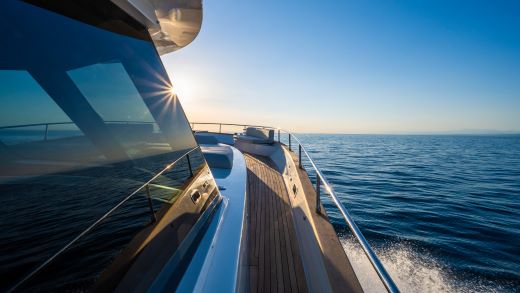
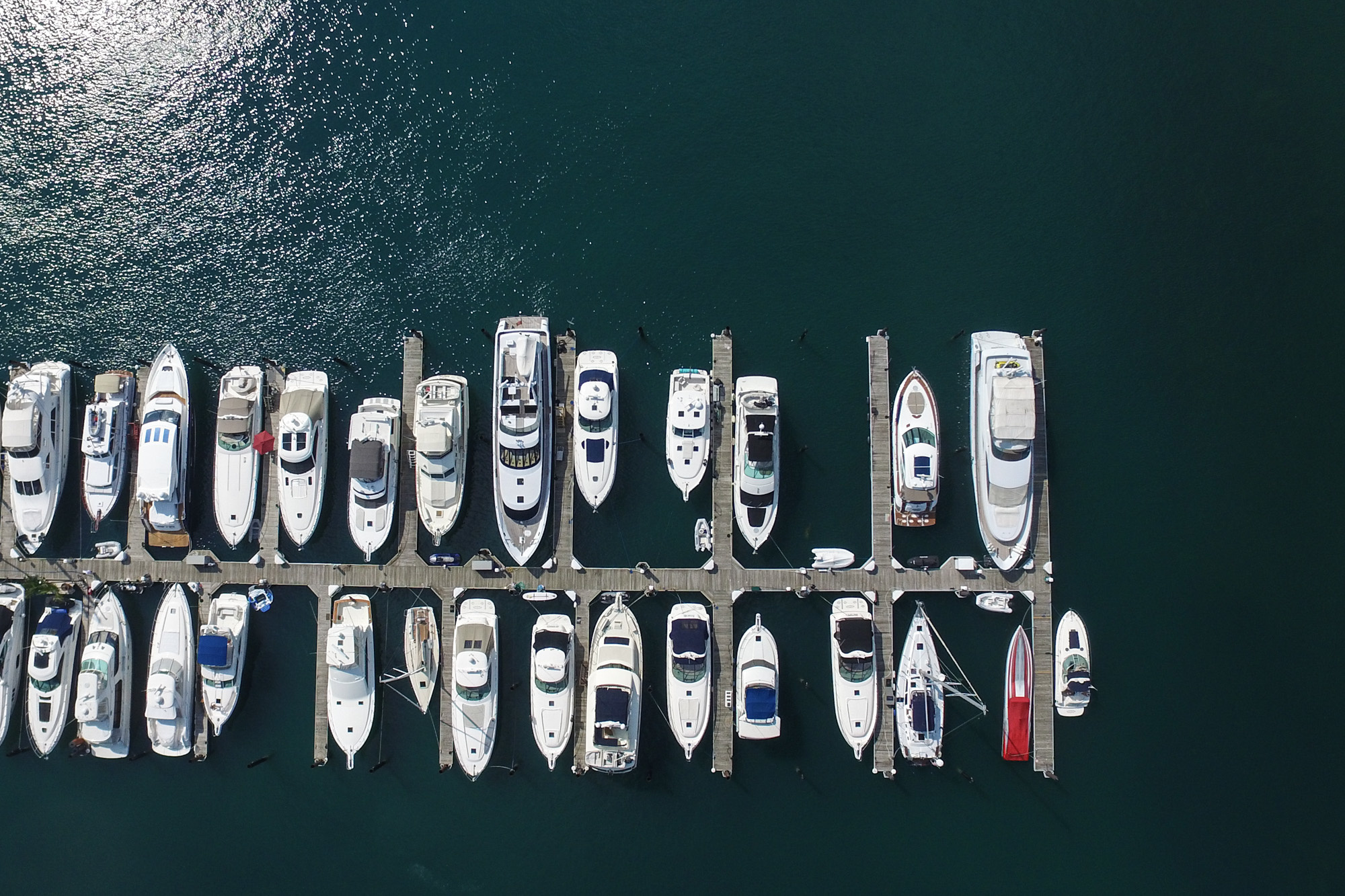
If you’ve spent time looking at larger boats, you may have come across the term “flybridge.” This elevated space is a popular feature on many boats, particularly motor yachts, and can add another comfortable area for driving, relaxing and enjoying the view.
Keep reading to learn more about this versatile boat feature.
What Is a Flybridge?
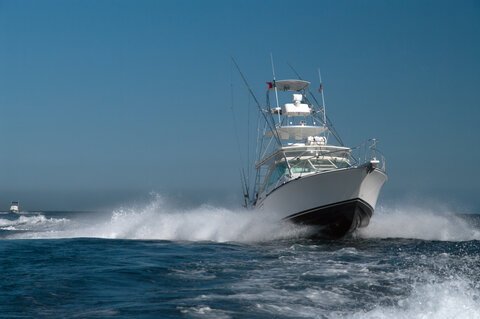
A flybridge is an elevated, open-air area on a boat that typically sits above the main deck or cabin. It often includes a second helm station, seating and space for entertaining or relaxing.
Think of it as an upper-level area that gives passengers and the captain a higher vantage point. Depending on the boat, it may be partially covered with a hardtop or canvas enclosure, while others are completely open.
Flybridges are most common on larger cruising boats and motor yachts, but they can be found on a variety of boat types and sizes.
What Is a Flybridge on a Boat Used For?
A flybridge can serve several purposes, depending on the boat’s design and how you plan to use it.
Helming: Many flybridges include a second steering station with controls and navigation equipment. Operating the boat from this elevated position can provide greater visibility, particularly when cruising or maneuvering in open water.
Relaxing: This area often has comfortable seating, making it a popular place to enjoy the scenery while underway. Some boats feature lounge seating, sun pads or even adjustable chairs.
Entertaining: On larger boats, the flybridge can function as an additional outdoor living space. Features may include a dining table, wet bar, grill or refrigerator.
Sunbathing: An open flybridge can provide plenty of space to relax in the sun. Some designs incorporate dedicated sun pads or convertible seating.
Learn More About Boating Activities
What Are the Benefits of a Flybridge?
One of the biggest advantages of this feature is the additional space it provides. Instead of having all your seating and entertaining areas on a single deck, a flybridge creates another level for passengers to spread out.
The elevated position also provides a different perspective from the main helm. The additional visibility can be useful when navigating, especially when you want a clear view around the boat.
This feature can also make a boat feel more versatile. Depending on the layout, the space can transition from a daytime lounge to an outdoor dining area or a second helm station.
Are There Different Types of Flybridges?
Yes. Flybridge layouts vary considerably from boat to boat.
Some are designed primarily as a second helm, with a steering wheel, controls and navigation electronics surrounded by seating. Others put more emphasis on entertaining, with large lounges, dining areas and outdoor appliances.
You’ll also find enclosed or semi-enclosed flybridges. These may have a hardtop, windshield or enclosure that provides protection from sun and weather while maintaining the elevated position.
The right setup depends on the boat and how you plan to spend time on the water.
Is a Flybridge Right for You?
Whether this feature makes sense depends largely on how you use your boat. If you enjoy entertaining, cruising with family and friends or spending long days on the water, the additional space may be appealing.
If you prefer a smaller boat, simpler layout or more direct access between the helm and other areas, a flybridge may not be as important.
When shopping for a boat, consider how you would actually use the space. Sit at the helm, check the visibility and walk through the seating and entertaining areas. This can help you determine whether a flybridge fits your boating style.
Flybridge FAQs
Q: What is a flybridge boat?
A: It is a boat that features an elevated, open-air deck above the main deck, typically with seating and often a second helm station.
Q: What is a flybridge on a boat used for?
A: It can be used for driving, relaxing, entertaining, dining and enjoying an elevated view from the boat.
Q: Are flybridge boats good for cruising?
A: Yes, they can be well suited for cruising because they often provide additional outdoor space, seating and an elevated helm with good visibility. The best choice depends on the boat’s size, layout and how you plan to use it.