Personal watercraft—or PWC—are fast, fun and built for thrills. But while the fun factor fool you. A PWC is not a toy. Their speed, jet propulsion, and quick handling demand real respect from every rider.
This guide covers the PWC safety basics you need to know, from gear and handling to safe riding practices.
Before You Ride: Personal Watercraft Safety Basics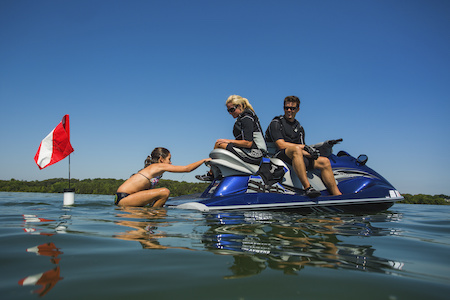
Start with the owners’ manual. Read and understand every safety warning, especially the sections about how the jet pump works.
Then review the rules of the road and check local boating regulations. Many states have age restrictions specific to personal watercraft use.
Before pressing the start button, run through a quick safety checklist:
- Check your fuel level
- Make sure your engine cut-off switch is working
- Confirm all required safety gear is on board
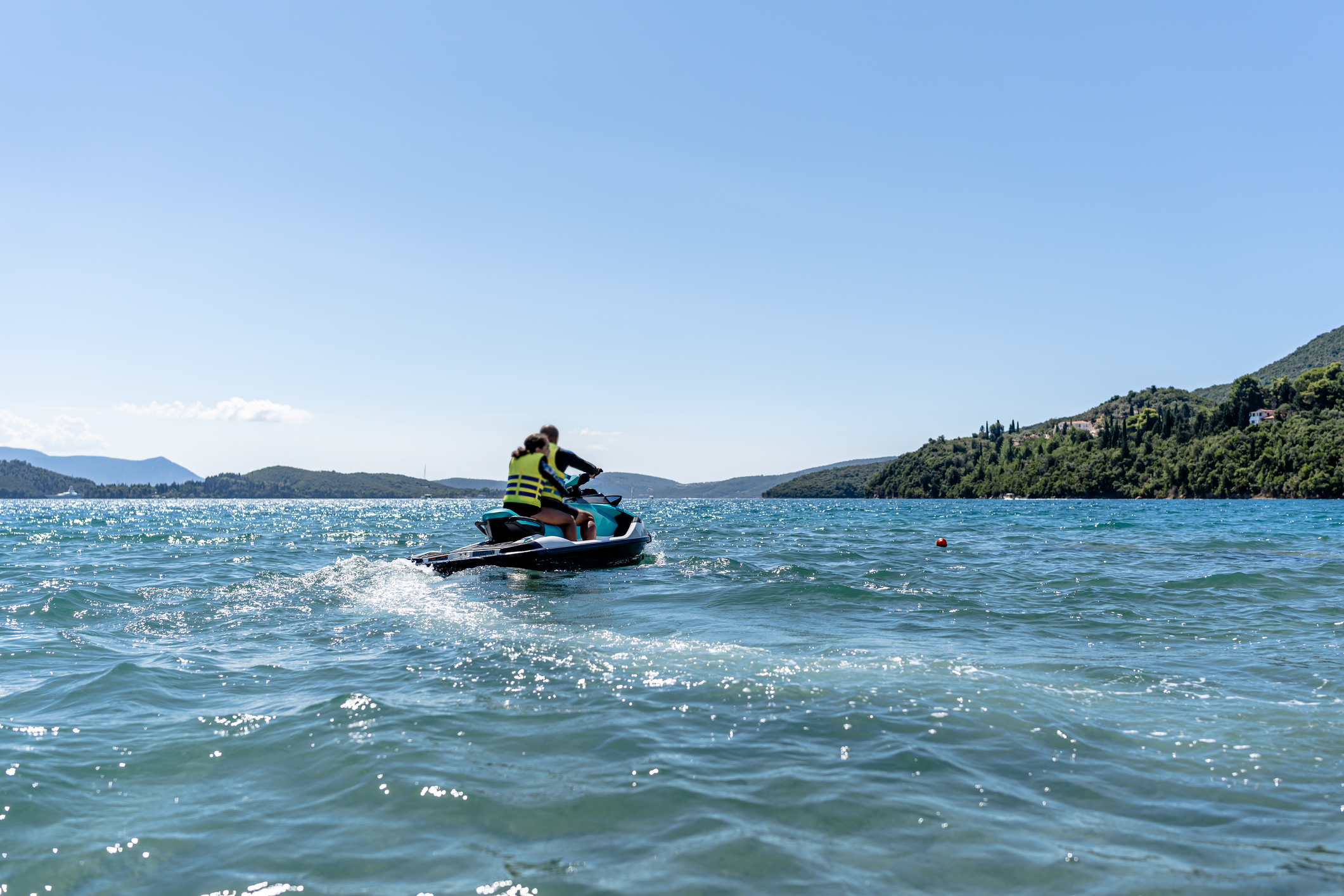
Next, gear up. Every rider must wear a Coast Guard-approved life jacket. If you’re driving, clip the engine cut-off lanyard to your wrist or life jacket before you go anywhere. This is both a legal requirement and your most important piece of personal watercraft safety equipment.
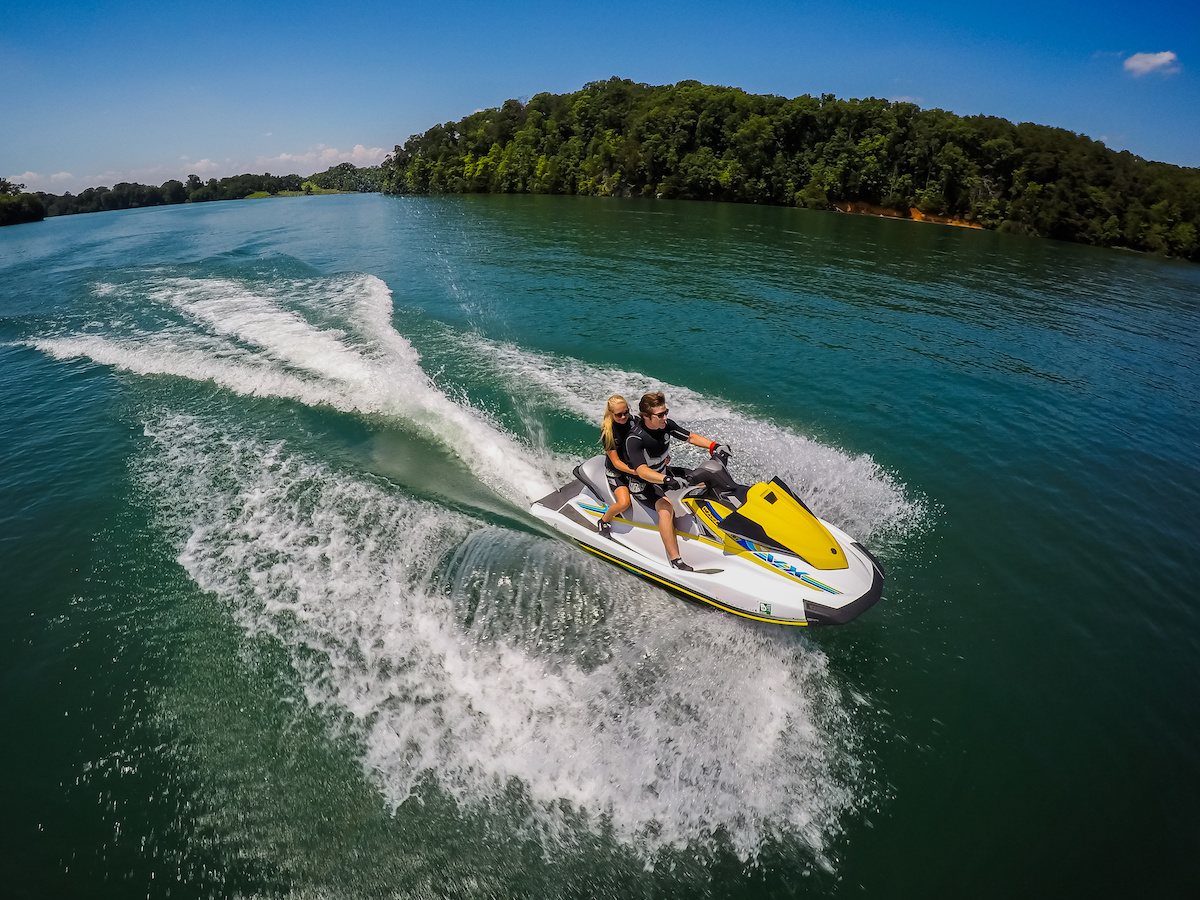
Wear clothes you're okay getting soaked in. PWC manufacturers recommend neoprene shorts or wetsuits to protect your body from the force of hitting the water during a high-speed fall. Add eyewear to block the wind and water and consider gloves and water shoes for added grip and traction.
Finally, check the weather forecast and plan your route before heading out.
How Does a PWC Operate?
This is a big one. Knowing how your craft handles is essential for safe PWC operation. A PWC uses jet propulsion—not a propeller to move forward. That changes everything about how it steers and stops:
- You must apply throttle to steer
- Releasing the throttle reduces your ability to turn
- There are no quick stops. At speed, a PWC can travel 200+ feet before slowing to a stop
Take time to familiarize yourself with a PWC’s unique handling before heading into open water. Find a quiet area and practice using the throttle, carving through turns, and coming to a stop.
Safe Riding Tips for PWC Operators
PWC safety on the water comes down to awareness, speed control, and respect for others. Keep these rules top of mind every ride:
1. Keep Scanning
Pay close attention to nearby boat traffic. Other boaters might not be prepared for how fast and agile a PWC can be. Before turning, look left, right, and behind to make sure no one is overtaking you.
2. No-Wake Zones, Speed & Awareness
Respect posted no-wake zones and reduce speed in high-traffic or restricted areas. These boating safety rules exist for good reason—they help protect you, other boaters, and the shoreline.
3. Give Everyone Space
Stay well clear of other boaters, swimmers, and the shore. Never follow directly behind another watercraft or jump boat wakes.
4. Know Your Stopping Distance
Like any boat, a PWC does not slow rapidly when the rider releases the throttle; instead, it coasts to a gradual stop. A fast-moving PWC needs 200+ feet to coast to a stop. Always give yourself plenty of room to stop.
5. Know How to Fall
Falls happen—especially during the learning process. If you start to fall, don’t hang on. It’s safer to get clear of the watercraft. Re-board only with the engine off, driver first.
6. Know How to Right a Capsize
If the craft flips, check the stern for a sticker showing the correct way to flip the craft upright to avoid engine damage. Once upright, re-board with the engine off.
7. Stay Out of Shallow Water
Though PWC can run in shallow waters, it’s best to avoid it. the strong water pressure from the jet pump can cause damage in environmentally sensitive areas. It can also pull in sand, rocks and other debris, damaging your craft.
8. Balance Your Load
If riding with passengers, distribute weight evenly, and stay within the manufacturer’s capacity limits.
9. Never Ride at Night
Personal watercraft don’t have navigation lights. Low visibility increases the risk of a fall or collision.
Required Personal Watercraft Safety Equipment
Requirements may vary by state, but generally include:
- A life jacket for each operating passenger, and person being towed
- A Coast Guard-approved B-1 fire extinguisher
- An approved sound-signaling device such as a whistle or horn
- An emergency engine cutoff lanyard attached to the operator
- Properly displayed registration numbers, letters and validation decals
- Vessel registration, available on request
- A functioning backfire flame arrestor and passive ventilation system
Recommended Safety Equipment
In addition to required gear, consider bringing:
- Hand-held VHF radio, and a cell phone as a backup
- A basic first-aid kit, sunscreen, and burn cream
- Hand-operated bilge pump
- An anchor and enough anchor line for your area
- If pulling a skier or other participant, a skier-down flag, an observer, and rearview mirrors may be required. Even if they’re not required, they’re good to have.
- Distress signals: flares, an orange flag, or signal mirror.
Personal Watercraft Safety Q&A
Q: What are the common safety rules for operating personal watercraft?
A: Wear a Coast Guard-approved life jacket and attach the engine cut-off lanyard before you ride. On the water, maintain safe speeds and keep your distance from other boats, swimmers, and the shore. Always follow boating laws, respect no-wake zones, and stay alert to your surroundings.
Q: What safety equipment is required for personal watercraft?
A: Required safety equipment includes a U.S. Coast Guard-approved life jacket for each rider, an engine cutoff switch lanyard attached to the driver’s wrist or lifejacket, a marine-rated fire extinguisher, sound signaling device, flares and vessel registration. PWC are also required to carry a backfire flame arrestor and passive ventilation system.
Q: Do you need to take a personal watercraft safety course?
A: Many states require you to complete a boating safety or PWC safety course. States set different age limits for operating a PWC, and many also require younger riders to complete an approved course before going on the water.
Even if the law doesn’t require it, you should still take a PWC safety course. You'll learn boating laws, navigation rules, and safe operation skills that can genuinely save your life.
Read Next: Boating Safety Guide
This article and video are sponsored by Progressive