It’s a day that comes for all boat owners—the day you need to part ways with your boat. It could be due to age, to damage or simply to the fact that you’ve outgrown it. However, before you launch the next chapter in your boating life, you’ll need to determine how best to dispose of your old boat.
Factors such as age, condition of the boat, maintenance history and market value are items to consider. Environmental regulations, disposal costs and logistics can also play a part in your decision.
Here we’ll discuss how to assess your boat and six basic options to explore:
- Sell it
- Trade it in
- Restore it
- Donate it
- Repurpose it
- Recycle or responsibly dispose of it
How Do I Take Stock of My Boat?
To start with, make an objective assessment of your boat. Check the overall condition by looking at:
- Hull, deck, and transom
- Engine and fuel system
- Mechanical and electrical systems
- Cosmetic condition—upholstery, gelcoat and flooring
For fiberglass boats, check for cracks, blisters, soft spots, gelcoat damage or other structural issues.
Is Restoring an Old Boat Cost-Effective?
First, you’ll need to know the market value of your boat. Online valuation tools like the J.D. Power Marine Values (formerly NADA) or Boat Trader’s Boat Price Checker Tool can supply baseline data for your boat. They can also analyze comparable listings and provide estimates of your boat’s current market value.
In addition, you can check local classifieds, regional marketplace listings and dealer websites for comparable boat sales (comps). Be sure to focus on verified sales data, not just asking prices.
If the cost of the restoration project exceeds the boat’s value, it may be in your best interest to sell, donate, recycle or otherwise responsibly dispose of it.
When is it Best to Sell Your Old Boat?
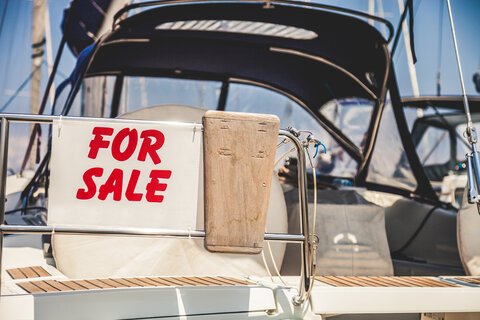
If your boat is still in decent condition and there is demand for that type of boat in the market, selling it can be a good option.
To prep your boat for sale:
- Make minor repairs
- Clean it thoroughly
- Gather its maintenance records
- Set a realistic price
- Be honest about the boat's condition in the listing
You’ll generally get a better price from a private seller than as a trade-in, but you will have to invest your time and effort in making a sale.
When Should You Opt to Trade in Your Boat?
If you’re buying from a dealer and upgrading to a new boat, trading it in may be your best option if the dealer is willing to accept the boat. You’ll get immediate credit towards your new purchase, and the dealer can handle all the logistics of the sale, including paperwork, transportation and prepping the boat for resale. Although you may not recoup as much cash value, the process requires much less effort on your part.
When Should You Restore Your Old Boat?
Just because a boat is old doesn’t mean it’s unusable. A well-made hull can last decades, even if the other parts are starting to show their age. If you love your boat, restoring it can bring it up to speed in terms of performance and reliability.
Restoring a boat makes the most sense when the hull and structure are still in good shape and the total restoration cost is less than what you’d pay for a new or replacement boat. It’s also a great option if you’re up for a hands-on project and have the skills, resources and time to make it happen.
Can I Donate my Old Boat?
if you boat has little resale value but still runs, donating it can might be your best bet. It lets you skip the hassle of trying to sell and can even put some money back in your pocket in the form of a tax deduction.
Vocational schools often take boat donations for hands-on training programs, and many charities and foundations accept them too—some will even pick the boat up for you. Since these are usually 501(c)(3) non-profits, your donation may qualify for a tax deduction based on the boat's fair market value or sale price if sold.
If you decide to donate, reach out to the organization to ask what boats they accept and what paperwork you'll need, like the title and maintenance records.
How Do You Repurpose an Old Boat?
If your old boat has more sentimental than monetary value, why not give it a new life by upcycling it? Repurposing keeps your old friend out of the scrap heap and can add nautical charm to your home or yard.
With some creativity, an old boat can become almost anything— from garden planters and bookshelves to seating areas, reading nooks, daybeds, swings, sandboxes, or even a bar. The only limit is your imagination.
Before you start, remove and properly dispose of hazardous materials, such as fuel tanks and old batteries. Make sure the boat is structurally sound—check for rot, mold, or mildew that could pose a health risk.
How Do I Recycle and Responsibly Dispose of an Old Boat?
If your boat isn’t worth fixing, selling or donating, recycle what you can and get rid of rest responsibly. You’ll need to drain and remove hazardous materials like fuel, oil, and lead-acid batteries, no matter how you plan to dispose of the boat.
Parts such as engines, metal hulls and electronics may be recycled or sold. Fiberglass hulls are harder to recycle and may need to be processed through energy recovery or landfill, depending on what is available in your area.
If you'd rather not handle it yourself, marine salvage companies can safely dismantle, haul away, and scrap the boat for you. Also, some landfills accept fiberglass or metal boats for a fee based on weight.
The NOAA Marine Debris Program offers guidance on end-of-life boat disposal and preventing abandoned vessels. Some state boating and conservation agencies have surrendered vessel programs to safely dispose of unwanted boats.
What Should You Do With an Old Pontoon Boat?
Because they are built on aluminum tubes, pontoon boats often can be more easily restored or rebuilt than wooden boats or fiberglass boats. Many DIYers actively seek out “project pontoons”—craft with intact tubes but tired interiors. This means you can often sell “as is” and find a buyer rather quickly.
If complete restoration isn’t an option, the tubes can be repurposed into a floating dock, raft or even a tiki bar. Aluminum tubes that are too far gone to reuse may still have value when sold for scrap.
Boat Trade-In, Restoration, and Replacement Q&A:
Q: What is the best thing to do with an old boat you don't use anymore?
A: There isn't one right answer to this question. If a boat is in working condition and has decent resale value, selling or trading it in are good options. If it's structurally sound but needs work, restoration may make sense. If it has little value, donation, recycling or responsible disposal may be the better choice.
Q: Is restoring an old boat worth it, or should I replace it?
A: If repairs or restoration costs exceed the boat’s value, it may be better to sell, donate, recycle or otherwise dispose of it responsibly.
A full restoration is worth it if the hull and structure are sound and the total restoration cost is less than what you’d pay for a new or replacement boat. It’s also worthwhile if you’re up for a hands-on project and have the skills, resources and time to make it happen.
Q: How do you dispose of an old fiberglass boat legally and responsibly?
A: The best approach is to reuse or recycle as much of the boat as possible, then responsibly dispose of what's left. Start by checking with your state environmental agency, local waste authority, marina or boatyard to find out what disposal options are available in your area. Rules and accepted materials vary by location, so confirm requirements before moving the boat.
Whatever you do, don't abandon the boat, burn it or sink it to get rid of it. Sinking or dumping a boat can pollute waterways and may violate state or federal laws.