The minimum age to operate a boat depends on where you plan to go boating, the type of boat you intend to operate, and whether you have completed a boating safety course.
Unlike driving a car, there is no single minimum age for operating a boat across the United States. Each state establishes its own boating laws, including age restrictions, education requirements, and supervision rules.
In some states, children as young as 10 or 12 can legally operate certain boats after completing an approved boating safety course. Other states require operators to be at least 14, 16, or older, depending on the vessel and circumstances.
Here is what you need to know about boating age requirements and how they differ by state.
What Is the Minimum Age to Drive a Boat?
There is no nationwide minimum age to drive a boat in the United States. State laws determine when someone can legally operate a motorized vessel.
In general, boating age requirements fall into a few categories:
- Under 12: Some states allow younger children to operate boats under specific conditions, often with adult supervision or restrictions on engine size.
- Ages 12–13: Many states allow operators in this age group to operate certain motorized boats after completing an approved boating safety course.
- Ages 14–15: Teenagers in this age group can operate motorboats in many states, although education certificates or other restrictions may apply.
- Age 16 and older: Many states allow independent operation of motorized boats at this age, provided the operator meets applicable safety education requirements.
These are general age ranges, not universal legal requirements. Always check the regulations in the state where you plan to operate a boat.
Does the Minimum Age Depend on the Type of Boat?
Yes. The age required to operate a boat can depend on whether it has a motor, its horsepower, and whether it is classified as a personal watercraft.
Here are the main differences:
1. Motorboats
Motorboats generally have more specific age restrictions than manually powered boats.
- Some states allow children to operate smaller motorboats.
- More powerful engines may require operators to be older.
- Younger operators may need an approved boating safety certificate.
- Adult supervision may be mandatory.
2. Personal Watercraft (PWC)
Personal watercraft often have stricter age requirements.
For example:
- Florida requires operators to be at least 14.
- California generally requires operators to be at least 16 to operate a motorized vessel of 15 horsepower or more, including a PWC, without the applicable adult supervision exception.
- Massachusetts requires PWC operators to be at least 16.
Never assume that being old enough to operate a regular motorboat automatically qualifies you to operate a personal watercraft.
3. Kayaks, Canoes, and Sailboats
Non-motorized boats generally have fewer legal age restrictions.
In many states, there is no specific minimum age for operating a manually powered kayak or canoe. However, parents and guardians should consider a child's swimming ability, maturity, and experience.
Do You Need a Boating Safety Certificate to Operate a Boat?
In many states, yes. A boating safety certificate demonstrates that an operator has completed an approved boating education course.
Depending on the state, operators may need to:
- Complete a state-approved boating safety course.
- Pass a boating safety examination.
- Carry their boating safety certificate while operating a vessel.
- Meet additional age and supervision requirements.
Some states require certificates based on the operator's age or birth date rather than requiring every boater to complete a course.
You can find approved courses and state-specific information through the U.S. Coast Guard website.
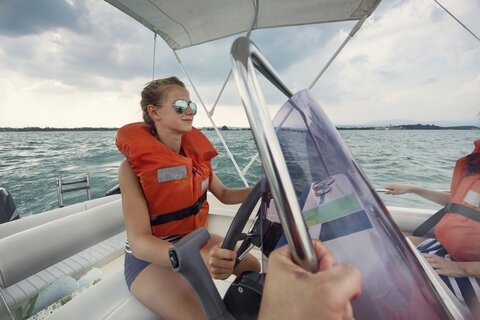
Can a Child Operate a Boat With Adult Supervision?
Yes, in many states, children can legally operate certain boats when a qualified adult is aboard.
However, supervision rules differ.
Depending on the state, the adult may need to:
- Be at least 18 or 21 years old.
- Hold a valid boating safety certificate.
- Be physically aboard the vessel.
- Remain close enough to take control of the boat if necessary.
What Should Parents Know Before Letting a Child Drive a Boat?
Before allowing a child to operate a boat, parents should understand both the legal requirements and the responsibilities involved.
Consider these important safety steps:
- Check state age restrictions: Confirm that your child meets the minimum age requirement for the specific vessel.
- Complete boating education: Enroll your child in an approved safety course if required.
- Provide adult supervision: Stay aboard and remain close enough to take control when necessary.
- Wear life jackets: Make sure every passenger has an appropriately sized, U.S. Coast Guard-approved personal flotation device.
- Start with smaller boats: Give young operators opportunities to develop their skills in calm, controlled environments.
- Explain boating rules: Teach children about speed limits, navigation, right-of-way rules, and potential hazards.
Remember that meeting the minimum legal age does not automatically mean a child is experienced enough to operate a boat safely.
Frequently Asked Questions
Q: Do you have to be 16 to drive a boat?
A: No. Sixteen is not a nationwide minimum age. Some states allow younger children to operate motorboats with supervision or a boating safety certificate. Other states have stricter age requirements.
Q: Can you drive a boat without a boating license?
A: In many states, yes. However, some states require an approved boating safety certificate. These certificates are different from traditional driver's licenses. Check your state's boating laws to determine which documents you need before operating a boat.
Q: Are boating age restrictions different for personal watercraft?
A: Yes. Personal watercraft often have separate and sometimes stricter age requirements. Many states require operators to meet a minimum age, complete a boating safety course, or have adult supervision.

