Choosing the right bait or lure can make a big difference when you're trying to catch fish. But with so many fishing bait types and artificial options available, it can be difficult to know what to use. Should you rely on live bait that naturally attracts fish, or use an artificial lure designed to imitate prey?
The answer depends on several factors, including the species you're targeting, where you're fishing, water conditions, and your preferred fishing style. Understanding how live bait and artificial lures work can help you choose the right option for your next day on the water.
What Is Fishing Bait?
Fishing bait is any natural or artificial material used to attract fish and encourage them to bite a fishing hook. When discussing types of fishing bait, anglers generally divide their options into two main categories: natural baits and artificial lures.
Natural baits include live bait, cut bait, and other pieces of naturally occurring food that fish are likely to eat. Artificial lures are manufactured to mimic the appearance, movement, or sound of prey.
Both approaches can be effective. The best choice depends on the fish you're targeting and how you plan to fish.
Read Next: What Is the Best Fishing Bait?
How Does Live Bait Work?
Live bait uses the natural characteristics of prey to attract fish.
When attached to a fishing hook, live bait can move through the water in ways that are difficult for an artificial lure to perfectly replicate. Its natural movement and scent can help attract fish, particularly when water visibility is poor or fish aren't actively feeding.
Some common natural baits include:
- Worms: A versatile option for freshwater species such as bass, panfish, and trout.
- Minnows: Often used when targeting predatory fish that feed on smaller fish.
- Shrimp: A popular saltwater bait for many inshore species.
- Crickets: Commonly used for freshwater panfish and other species.
- Cut bait: Pieces of fish used to attract species that feed by scent, such as catfish and some saltwater fish.
Live bait can be fished in several ways. An angler might suspend a minnow beneath a bobber, drift bait along a current, or fish bait near the bottom in deep water.
Because live bait behaves naturally, it doesn't always require much movement from the angler. Instead, the bait itself helps attract the attention of nearby fish.
What Are Fishing Lures?
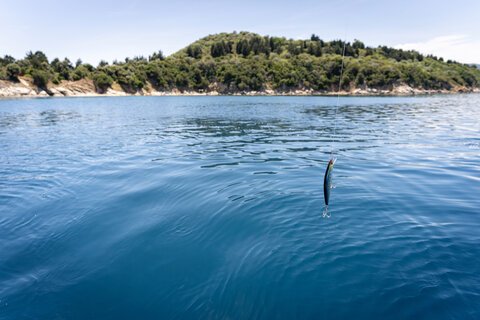
Fishing lures are artificial baits designed to imitate the appearance, movement, sound, or behavior of prey. They are typically made from materials such as plastic, wood, metal, rubber, or synthetic fibers.
Unlike live bait, artificial lures don't rely on a naturally occurring scent or movement. Instead, anglers control the lure's action by casting, retrieving, jigging, or otherwise manipulating it through the water.
Some common types of fishing lures include:
- Jigs: Weighted lures that can be bounced or moved through the water column.
- Crankbaits: Hard-bodied lures designed to swim when cast and retrieved.
- Spinnerbaits: Lures with rotating blades that create vibration and flash.
- Spoons: Metal lures that wobble and reflect light as they move.
- Soft plastic baits: Flexible lures designed to imitate worms, minnows, crawfish, and other prey.
- Topwater lures: Surface lures that imitate prey moving across the water.
- Flies: Lightweight artificial patterns used primarily in fly fishing.
Artificial lures come in a wide variety of sizes, colors, shapes and actions. This gives anglers plenty of ways to match their presentation to the species and conditions.
How Do Artificial Lures Attract Fish?
Artificial lures are designed to trigger a fish's natural feeding or predatory instincts. Depending on the lure, it may imitate something a fish wants to eat or simply create movement, vibration, and flash that cause the fish to investigate.
For example, a crankbait may resemble a small bait fish swimming through the water. A soft plastic crawfish can imitate prey moving along the bottom. A spinnerbait uses flashing blades and vibration to attract fish even when the lure itself doesn't closely resemble a specific food source.
Artificial lures can also fish at different depths and speeds. An angler can retrieve a lure quickly, slowly drag it along the bottom, or pause it to create a more natural presentation. The goal is to attract the attention of a fish and trigger it to strike.
Live Bait vs. Artificial Lures: Which Is Better?
Neither live bait nor artificial lures is always the better choice. Each has advantages depending on your fishing situation.
Advantages of Live Bait
Live bait is often a good choice for anglers who want to present fish with something that naturally resembles their food. Because live bait provides natural movement and scent, it can be especially effective when fish are cautious or aren't chasing prey.
Other advantages include:
- Natural presentation: Live bait moves and behaves like real prey.
- Scent: Natural scents can help fish locate bait, especially in murky water.
- Versatility: Many species respond to worms, minnows, shrimp, or other natural baits.
- Beginner-friendly: Fishing with a bobber and live bait can be a simple way to get started.
Live bait can also be effective when fish are less willing to chase a moving lure. An angler can place bait in a productive area and wait for fish to come to it.
There are some downsides, however. Live bait needs to be kept alive or fresh, which can require additional equipment and preparation. Some types can also be messy to handle or difficult to transport.
Advantages of Artificial Lures
Artificial lures offer anglers more control over how they present bait. Instead of waiting for fish to find stationary bait, you can actively search for fish by covering water and changing your retrieve.
Artificial lures are also reusable. One lure can potentially catch many fish, while live bait typically needs to be replaced after it is used.
Other advantages include:
- Easy storage: Most lures fit in a tackle box.
- Active fishing: Anglers can cover large areas by casting and retrieving.
- Variety: Different lures can target different species, depths and conditions.
- Less mess: Artificial lures generally don't require keeping bait alive.
- Precision: You can target specific depths, structures and areas.
Artificial lures are especially popular for techniques such as bass fishing, where anglers often use different lure styles to search for active fish.
Choosing the Right Fishing Bait Types
When deciding between live bait and artificial lures, start by considering the species you're targeting. Different fish have different diets and feeding behaviors.
For example, a bass fisherman might use a soft plastic worm, crankbait, or spinnerbait to imitate the prey bass commonly eat. An angler targeting catfish may choose natural baits with a strong scent.
Water conditions also matter. In clear water, fish may be able to closely inspect an artificial lure, making a realistic presentation important. In murky water, vibration, movement, or scent can help fish locate the bait.
Consider the depth you're fishing, too. Some lures are designed to remain near the surface, while others can reach deep water. Live bait can also be weighted or rigged to reach specific depths.
Weather and fish activity can influence your choice as well. When fish are actively feeding, an artificial lure can allow you to cover more water and find them quickly. When fish are inactive, presenting a natural bait slowly may be more effective.
Live Bait and Artificial Lures for Different Types of Fishing
Your fishing technique can also influence which option makes sense.
Bass Fishing
Bass commonly respond to both natural bait and artificial lures. Soft plastic baits, crankbaits, spinnerbaits, and topwater lures are popular choices because they allow anglers to imitate different types of prey.
Artificial lures are particularly useful when you want to cover a lot of water and locate active bass.
Fly Fishing
Fly fishing relies primarily on artificial flies designed to imitate insects, bait fish, and other small prey. Flies are generally lightweight, so specialized fly-fishing equipment is used to cast them.
Fly anglers often choose patterns based on what fish are currently feeding on. Matching the hatch can help an artificial fly closely resemble the insects available in the water.
Ice Fishing
When ice fishing, anglers commonly use live bait, artificial jigs, or combinations of both. Small minnows and other natural baits can attract fish beneath the ice, while jigs allow anglers to actively move their presentation.
Because anglers are ice fishing through a relatively small opening, vertical jigging can effectively make an artificial lure visible to nearby fish.
Fishing From a Moving Boat
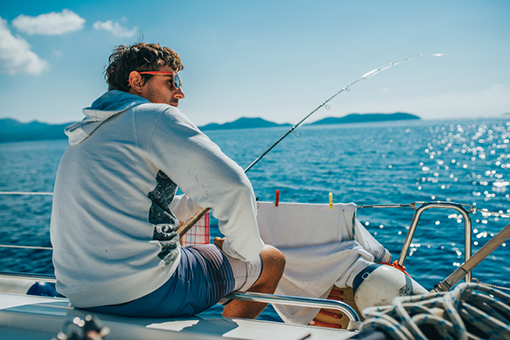
Fishing from a moving boat provides another opportunity for artificial lures. Trolling allows anglers to pull lures behind the boat while covering water and maintaining a consistent depth.
Artificial lures can also be useful when casting from a boat because you can quickly target different structures, shorelines, and depths.
How to Use Live Bait and Artificial Lures Safely
Whatever type of bait you choose, use the appropriate equipment for the fish you're targeting. Make sure your fishing line, rod, reel, and fishing hook are suitable for the species and conditions.
If you're using live bait, follow local regulations regarding which species can be used as bait and where they can be collected or purchased. Regulations may vary by state and waterway.
It's also important to handle fish carefully, particularly if you plan to catch and release. Wet your hands before handling fish, minimize the time they spend out of the water, and remove the hook carefully when possible.
Anglers should also check local fishing regulations before heading out. Some waters have restrictions on bait, hooks, seasons, species or fishing methods.
Which Is Right for You?
The best choice between live bait and artificial lures ultimately comes down to your target species, fishing location and personal preference.
Live bait provides a natural combination of movement, scent and appearance that can be highly effective for many species. Artificial lures give anglers more control and allow them to actively search for fish by varying their presentation.
You don't necessarily have to choose one or the other, either. Many anglers keep both live bait and artificial options available so they can adjust their approach as conditions change.
Understanding the different fishing bait types and how they work gives you more options on the water—and a better chance of finding what gets the fish biting.
Frequently Asked Questions
Q: How do I choose the right bait for freshwater fishing?
A: Start by identifying the species you're targeting and learning what it naturally eats. Worms, minnows, insects and other natural baits can be effective for many freshwater species, while artificial lures such as soft plastics, crankbaits and jigs offer additional options. Consider water clarity, depth, weather and fish activity when choosing your presentation.
Q: How do I choose the right bait for saltwater fishing?
A: Consider the species you're targeting and the prey it commonly eats in the area. Shrimp, squid, cut bait and other natural baits can work well, while artificial jigs, spoons, plugs and soft plastics can imitate bait fish and other prey. Local conditions, water depth and current can also help determine which option to use.
Read Next: Saltwater Fishing Accessories
Q: How do I decide between live bait and artificial lures?
A: Choose live bait if you want a natural presentation using movement and scent to attract fish. Artificial lures may be a better choice if you want to actively cover water, experiment with different presentations, or reuse your tackle. Your target species, fishing technique, and water conditions can all help determine which option is most effective.
Originally published in September 2013. Updated in August 2026.