If you've ever spotted a multihull boat slicing through the waves, chances are you've seen a trimaran.
Unlike standard sailboats that rely on a single hull and a heavy keel for balance, a trimaran boat has three separate hulls. With three hulls, this sailboat offers sailors a unique blend of speed, stability, and safety.
So, whether you're seeking a cruising trimaran or a high-performance racer, we'll explain why this three-hulled design is special.
What Is a Trimaran with Three Hulls?
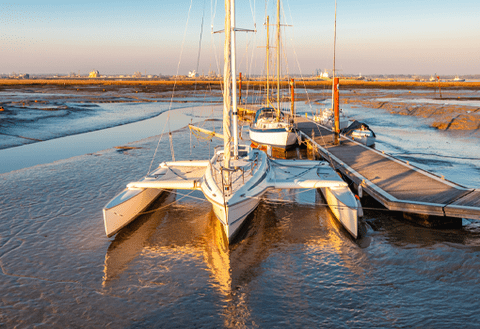
A trimaran is a multihull vessel consisting of a central hull and two smaller outer hulls—also known as "amas" or "floats"—attached by lateral beams called akas. This design offers a wide beam, creating massive natural stability without the need for a heavy, deep lead keel.
Because they have a minimal surface area to drag through the water, these vessels are among the fastest types of boats available today. Unlike monohulls, which must push a heavy ballast through the water, the trimaran stays light. This allows it to "plane" or skim across the surface with far less effort.
How Does a Modern Sailing Trimaran Work?
The magic of the trimaran is found in its unique design and its interaction with the elements.
- The Central Hull: This is the center hull where the main living space, mast, and cockpit are usually located.
- The Outer Hulls (Amas): The outer hulls provide the "righting moment." As the wind pushes the sails, the boat leans slightly onto one of the outriggers. This provides the buoyancy needed to keep the boat upright.
- Stability: Because the boat is so wide, it's significantly less likely to capsize than a monohull. These boats are famous for their outstanding stability, speed, and minimized air drag.
- Speed and Apparent Wind: These vessels have a unique relationship with apparent wind. Because they move so fast, they actually create their own wind over the sails. That allows them to accelerate even further, often sailing faster than the actual wind speed.
What Are Some Common Uses for Trimarans?
- Day Sailing: Many smaller models, especially folding trimarans, are perfect for quick afternoon outings. Their stability offers a safe platform for families, and their ease of handling delivers an engaging sailing experience.
- Coastal Cruising: A cruising trimaran is an excellent choice for island hopping. Their shallow draft allows sailors to navigate into tucked-away coves and beaches that monohulls and catamarans with deep keels can't reach.
- Offshore Performance Sailing: Specialized trimarans are built for high-speed ocean navigation. Plus, their ability to handle heavy weather and maintain high-average speeds makes them an excellent option for long-distance racing.
What Are the Pros and Cons of a Trimaran Boat?
Advantages of Trimarans
- Speed: Trimarans are generally faster than both monohulls and catamarans of an equivalent size.
- Stability: They remain very flat while sailing, making for a more comfortable living space for those prone to seasickness.
- Shallow Draft: The lack of a deep keel means you can explore shallow reefs or beach the boat for a picnic.
- Folding Options: Many modern sailing designs allow the outer hulls to pull inward. That means the boat can fit into a standard marina slip or be pulled out of the water on a trailer.
Disadvantages of Trimarans
- Docking Space: Unless it is a folding trimaran, the wide beam makes finding a marina slip difficult and expensive.
- Interior Volume: Compared to a catamaran, which can have cabins in both hulls, a trimaran's living space is mainly restricted to the narrow central hull.
- Price Point: The complexity of the hulls and the high-strength beams often results in a higher price than a standard monohull.
How Does a Trimaran Compare to Other Sailboats?
Trimarans vs. Monohulls
The most striking difference between a trimaran and a monohull is the absence of a heavy lead keel.
- Speed and Weight: Monohulls rely on a heavy keel for balance, which adds significant weight and drag. Trimarans are much lighter and can reach significantly higher speeds.
- Shallow Water Access: Because they don't have a deep keel protruding beneath the central hull, trimarans have a much shallower draft. This allows them to navigate shallow water that would cause a monohull to run aground.
- Heeling: While a monohull leans (heels) significantly under wind pressure, a trimaran stays relatively flat. This provides a more stable platform.
Trimarans vs. Monohulls
The most striking difference between a trimaran and a monohull is the absence of a heavy lead keel.
- Speed and Weight: Monohulls rely on a heavy keel for balance, which adds significant weight and drag. Trimarans are much lighter and can reach significantly higher speeds.
- Shallow Water Access: Because they don't have a deep keel protruding beneath the central hull, trimarans have a much shallower draft. This allows them to navigate shallow water that would cause a monohull to run aground.
- Heeling: While a monohull leans (heels) significantly under wind pressure, a trimaran stays relatively flat. This provides a more stable platform.
Trimarans vs. Catamarans
While both are multihull boats, trimarans and catamarans differ greatly in their use of space and performance:
- Comfortable Living Spaces: One of the primary disadvantages of a trimaran is the interior volume. Because most of the living area is restricted to the narrow center hull, they generally have less comfortable living spaces than catamarans.
- Performance: This boat is often considered the higher-performance option in modern sailing. With a narrower central hull and less overall surface area, they typically outperform catamarans in both speed and upwind handling.
- Docking and Folding: Catamarans have a fixed wide beam, while many modern trimarans are folding trimarans. This "folding" feature allows the outer hulls to pull inward, making it easier to fit into a standard marina slip (which is a common struggle for wide catamarans).
How to Sail a Trimaran
Learning how to sail a trimaran is an exciting shift for those used to single-hull boats. Because of their design, they behave differently in terms of physics and feel:
- Handling and Responsiveness: They're incredibly light and turn quickly because they lack the drag of a massive lead keel.
- Stability Management: Unlike a monohull that heels over to "bleed off" wind pressure, a trimaran stays flat. That means the sailor must be more proactive with the mainsheet in gusty conditions.
- Apparent Wind Mastery: As the boat accelerates, the wind direction you feel shifts toward the bow. That requires ongoing sail-trim modifications to uphold performance.
- Tactile Feedback: Sailors must rely on the boat's speed and the pressure felt in the helm rather than the angle of the deck to judge when it is time to shorten sail.
Additional Considerations
The benefits of this boat differ from those of a monohull. First and foremost, the configuration provides excellent stability and allows for little heel. And the use of a tiller extension gives the helmsman greater leverage and control—especially when making quick adjustments in changing wind conditions.
Modern options typically feature innovative rigging systems that simplify sail handling (even for smaller crews). However, it's important to note that the wide beam and unique design mean docking requires skill and slip fees can be higher due to the larger space required.
Who Should Choose a Trimaran?
The trimaran delivers a special sailing experience ideally suited for:
- Adventurous sailors looking for speed without sacrificing safety.
- Families seeking a stable and comfortable platform for cruising.
- Racers striving for state-of-the-art performance.
Whether you're a seasoned pro or novice sailor, this boat's combination of speed, stability, and space makes it an excellent choice.
Trimaran Boats Q&A
Q: What is a trimaran?
A: A trimaran is a distinctive type of sailboat that features a central hull with two smaller outrigger hulls (known as amas) on either side. This three-hulled setup blends speed, stability, and safety—setting it apart from traditional monohulls and catamarans.
Q: How many hulls does a trimaran have?
A: As the name suggests, a trimaran always has three hulls: a larger center hull (that contains the main living quarters and cockpit) and two smaller outer hulls that provide stability and help keep the boat balanced.
As mentioned, these smaller, outrigger hulls play a key role in maintaining high stability and preventing the boat from leaning too far—especially in windy conditions.
Q: Is a trimaran faster than a catamaran?
A: Generally speaking, yes. Thanks to its narrow main hull and lightweight design, this type of boat often outpaces many cruising catamarans of the same size. Plus, it's known to perform better upwind and to handle better in light winds.
This sailboat is ideal because its streamlined shape reduces drag, and many models use full-length battens to fine-tune the sail trim. As a result, these vessels are quicker, more responsive, and well-balanced. This allows them to offer a top tier sailing experience for amateurs and seasoned pros alike.