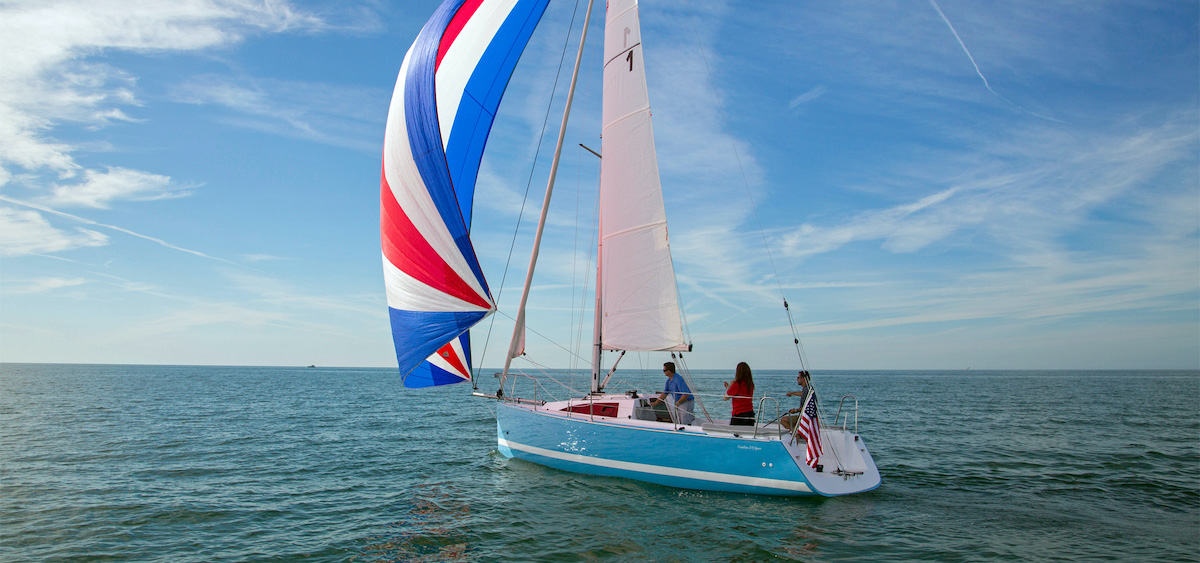
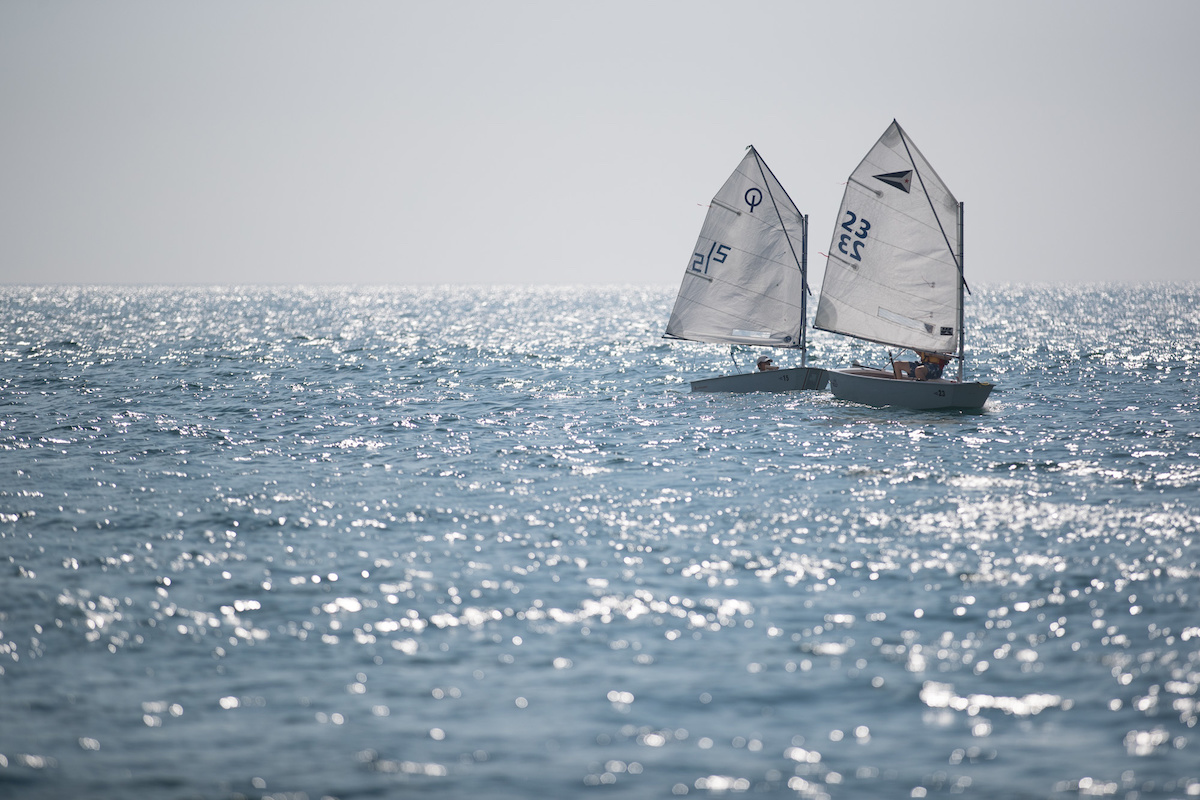
Interested in buying a sailboat and curious about daysailers (also known as day boats)? These small, simple sailing vessels offer easy, accessible, all-day sailing (as opposed to overnight trips or long voyages).
Daysailers can comfortably accommodate 2 to 6 passengers and are perfect for short outings and casual getaways. Keep scrolling, and we’ll tell you all about them.
What are Daysailer Sailing Vessels, Exactly?
Unlike a cruiser, which is more like a floating home, a daysailer has a roomy, comfortable cockpit instead of cabins.
These boats usually range from 14 to 25 feet in length, making them easy to handle and transport. While some models include a small “cuddy” cabin for storage, most are designed strictly for day sailing, with no sleeping berths.
As the name suggests, a daysailer is meant for day trips—you’re back on the trailer or dock well before sunset.
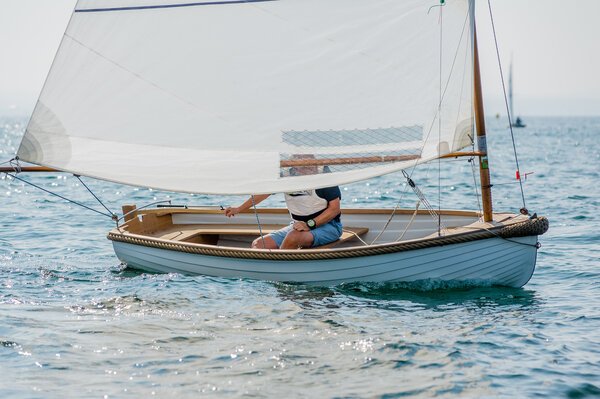
What Features do These Sailboats Typically Offer?
The beauty of this type of sailboat lies in its simplicity. Here’s what we mean:
- Easy to Rig: Most daysailers can be rigged and launched in about 15–20 minutes. You aren’t spending half your day messing with complex stays and halyards. These small boats are also easy to launch, making them accessible for quick outings.
- Size and Portability: Typically ranging from 14 to 23 feet, these boats are prime candidates for easy trailering. This means you aren’t stuck in one lake or bay all season.
- Daysailers have a relatively low displacement, which contributes to their light weight and ease of handling.
- Manageable Sail Area: More often than not, the rig is a simple sloop (main and jib). It’s enough power to offer excellent sailing performance without feeling like you’re wrestling a monster. Many daysailers feature a fixed or retractable keel, which provides stability and enhances performance, especially in varying wind conditions.
- Simple Power: Since you don’t have a heavy inboard engine, many owners use a small outboard or an electric trolling motor to get in and out of the slip. Some daysailers also offer a secondary inboard propulsion option for added versatility.
- Responsive Handling: Because these boats are light, you feel every gust. It makes sailing the boat an active, engaging experience. Most use a tiller for steering, offering positive helm control and easy maneuverability.
Shifting crew weight is generally less critical for stability on daysailers compared to larger or racing sailboats.
Some daysailer models are available at a lower price point with fewer sails included, making them appealing to budget-conscious buyers.
Why You’ll Probably Love This Sailboat
- The Price Point: You can get into a fantastic used daysailer for the price of a used car. Even high-end modern classics offer a lot of boat for the money.
- Low Stress: No plumbing to winterize, no complex electrical systems to troubleshoot, and no massive hull to wax for three days straight.
- Accessibility: You don’t need a professional crew on one of these rigs. You can take your kids, your dog, or just yourself, and have a world-class time. Many manufacturers will also offer a specialized version of the rig featuring racing-specific rigging, sails, and equipment designed for competitive sailing.
Daysailers vs. Other Options
How do you know if a daysailer is right for you compared to a dinghy or a full-on cruiser?
- Daysailer vs. Dinghy: A dinghy is for “wet” sailing. In comparison, a daysailer is much more stable and keeps you (mostly) dry.
- Daysailer vs. Cruiser: A cruiser has a kitchen and a bed, but it’s heavy and more expensive. If you aren’t actually planning to sleep on the boat, you may not require the additional space.
Common Daysailer Questions
Q: Is a daysailer suitable for beginners?
A: Absolutely; daysailers are stable enough to be forgiving but sensitive enough that you can learn how to sail correctly.
Q: How big is a typical daysailer?
A: You’ll usually find them between 16 and 22 feet. At this size, you have plenty of room for four adults to sit comfortably, but the boat is still small enough to be towed by a standard SUV.
Q: Can you take a daysailer on the ocean?
A: While some high-performance options are incredibly seaworthy, most are best for inshore use. They are perfect for bays and sounds, but you generally shouldn't take one 20 miles offshore where the conditions may get rough.
Q: Where can I find the best deals on daysailer sailboats for sale?
A: Look at local yacht club bulletin boards and online classifieds. Since these boats are so durable, the used market is usually robust. You can often find a well-loved option that’s ready to sail immediately.