Stalking fish in ten inches of water isn't just fishing; it's hunting. And in the world of coastal angling, the flats boat is your tactical edge. These specialized, ultra-shallow-water tools grant hard-core anglers access to places most boaters will never see.
Here's what you actually need to know before putting a deposit down on a flats skiff.
What is a Flats Boat?
A flats boat is a vessel that "ghosts" over extremely shallow water, usually 16 to 20 feet long. Built by various manufacturers with hull types like modified vee, flat, tunnel, or catamaran, these boats float in waters that would ground most others.
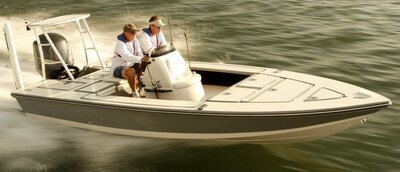
Flats boats are made from lightweight, durable materials and can accommodate 3 to 11 passengers (averaging about 6). Thanks to their nearly flat bottoms and ultra-low profiles, their design minimizes hull slap (which can spook fish) and allows for quick movement between fishing spots.
These boats are ideal for:
- Sight-casting from elevated decks
- Fly fishing on large, clean casting platforms
- Exploring tidal creeks and crevices inaccessible to larger vessels
The Essential Features List
When shopping for a flats boat for sale, focus on features that matter most for serious anglers:
1. Shallow Draft
To access skinny water, aim for 6 to 10 inches deep. Tunnel hulls also allow higher engine placement, improving shallow-water performance. A wide beam adds stability and space. And lighter materials (think: carbon fiber) can help the boat sit higher.
2. Poling Platform
An elevated stand above the outboard motor provides a bird's-eye view for spotting fish and navigating narrow channels.
3. Clean Casting Decks
Flush decks with recessed hardware prevent line tangles. Wide gunwales let anglers move safely between fore and aft casting decks.
4. Stability vs. Noise
While flat bottoms offer stability, they can get quite rowdy. However, modern hulls reduce noise and include spray rails to keep decks dry. Note that flats boats prioritize fishing function over protection from wind and spray.
Read Next: Does Talking Scare Fish?
5. Shallow-Water Hardware
Hydraulic jack plates let you raise the outboard motor to avoid damage. Flats boats accommodate various power options and often include livewells, rod storage, and high-thrust trolling motors with remotes for windy days.
Bay Boat vs. Flats Boat
As the name suggests, a bay boat is built for open-bay use. That means it has higher sides to keep you dry and can handle a 2-foot chop.
On the other hand, a flats boat is built for the marsh and is popular for its remarkably shallow draft, making it ideal for saltwater fishing in bays, rivers, and the shallow flats of Florida.
If you try to cross an open bay in a flats boat during a blow, you're going to get wet. But if you try to take a bay boat into a 6-inch tidal flat, you're going to be calling a tow boat.
Browse Bay and Flats Boat Brands
Flats Boat Q&A
Here are the answers to the most frequently asked questions anglers have when browsing flats boats for sale:
Q: What makes a boat a flats boat?
A: It's all about the draft and the profile. A flats boat has a very shallow draft (usually under 10 inches), a wide-open casting platform, and a poling platform. It's built for stealth and shallow-water access, not for hauling ten people to a sandbar.
Q: Is a flats boat suitable for saltwater fishing?
A: It is the best tool on the planet for saltwater fishing in "skinny" areas like mangroves, lagoons, and marshes. However, it isn't meant for the open ocean or rough inlets. It's a specialized tool for specific environments.
Q: What features should I prioritize when buying a flats boat?
A: Prioritize a shallow draft, hull silence (no hull slap), and a clean deck layout. If you can't pole it silently or cast from it without tangling your line, it's not doing its job.