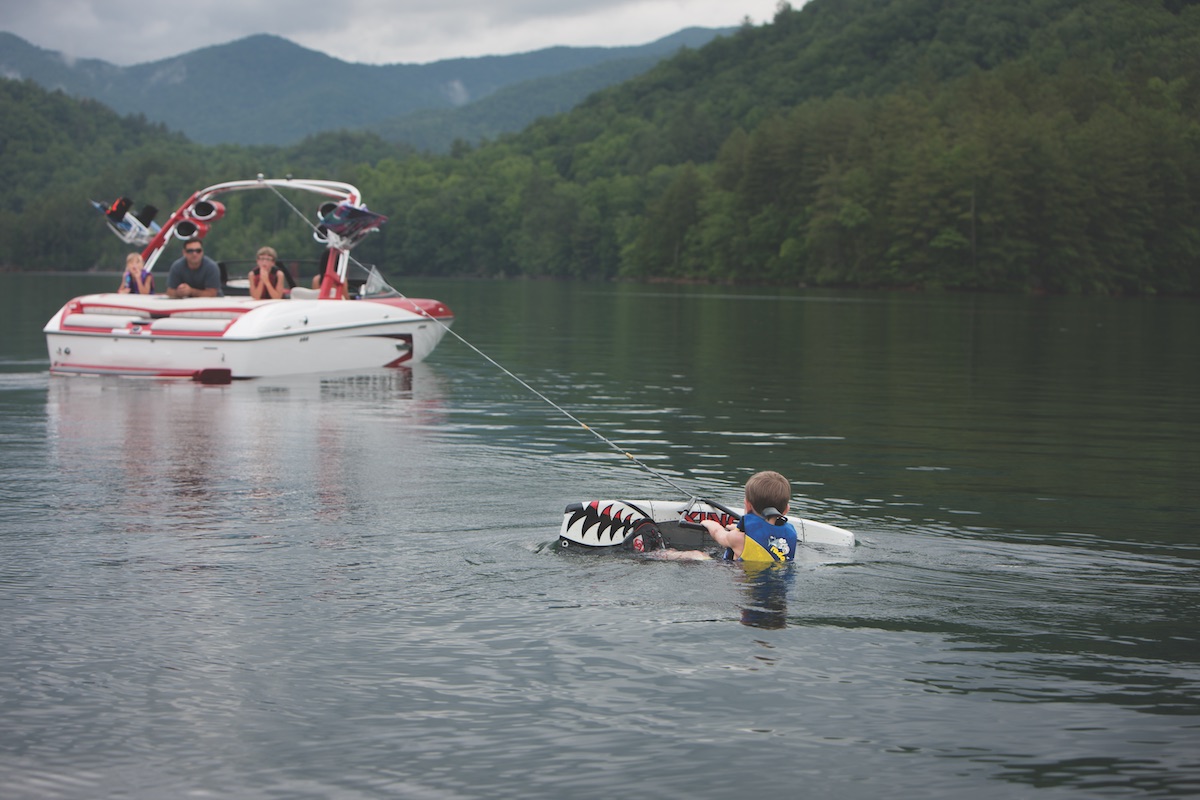
Wakeboarding, as argued by some, single-handedly saved the tow-boat industry from the stasis of a water-ski industry that had gone stale around the mid 1990s. Why? Well, wakeboarding was new. It was hip. Its riders were younger because it’s easier to do a deep-water start on a wakeboard than it is on a slalom ski, and not only did tow-boat manufacturers begin selling more boats, they began to tailor models specifically geared toward wakeboarding.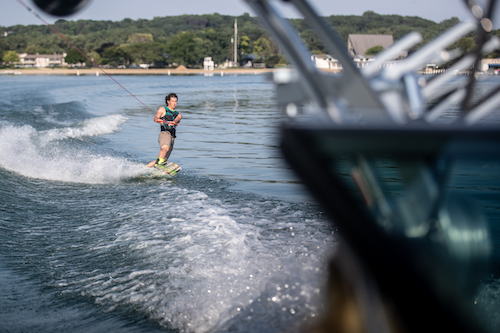
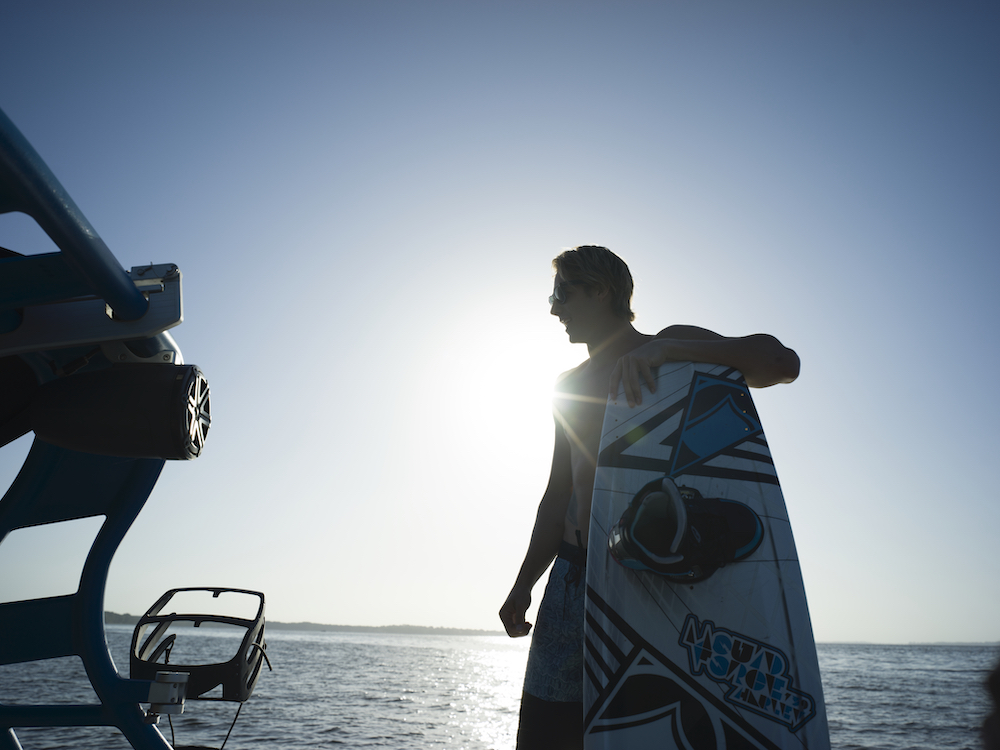
Then, the ski pylon evolved. It got taller so riders could get bigger air during tricks. Next, manufacturers turned the pylon into a wakeboard tower with four mounting points on the gunwales for extra stability, and that’s still essentially the state of the art in the wakeboard boat industry. The best wakeboard boats have towers with wakeboard racks and built-in ballast systems to jack up the wakes for wakeboarding and, nowadays, wakesurfing.
If you're ready to learn how to wakeboard, be sure to start with these basic steps.
How to Wakeboard
- Start in the water floating on your back with your arms straight holding the towrope.
- Place your arms on each side of your knees and bend your knees to start.
- With the board strapped to your feet, place the board in front of you towards the boat.
- Keep the board on its side in the water—and allow it to plane on top of the water once you begin.
- Determine whether you ride regular or goofy (left-foot or right-foot forward).
- Signal your driver that you are ready to begin.
- As you pick up speed, allow the boat to pull you up to a standing position.
So, get the gist? Just put the board in front of you, yell hit it, stay crouched and you pop on plane as the fins under the board turn it as you rise on plane. Okay, there’s a bit more to it than that—but we believe in you.
Goofy or Regular?
Wondering how you know whether you ride goofy or regular? Most people ride left-foot forward. Right-foot forward is known as goofy foot. To be certain, stand with both feet together and have someone surprise you as best as possible with a push from behind. Whatever foot you put forward to catch yourself is the foot that goes forward. Or just find a skateboard and try to ride. How you ride a skateboard is how you ride a wakeboard.
When it comes to tricks, work up to these gradually. The number of tricks you can learn will boggle the mind and there are a ton of resources online for learning new moves. What’s more, the majority of the tow boat market is geared toward wakeboarding, so whether you are looking for a new or a used boat, you will find one without too much trouble.
Types of Wakeboarding Boats
Here’s where wakeboarding became the darling of the towboat industry in a matter of a couple of model years: If you want to go wakeboarding, you really need a wakeboard boat. Runabouts, deck boats, pontoon boats, will also work—but a specifically designed wake boats work better. Why? Other types of boats don't tend to stay on plane at wakeboarding speeds and their wakes are insufficient for launching into the air.
So, what makes a wakeboard boat a wakeboard boat? Well, the aforementioned wakeboard tower, the ballast systems and just as important, but maybe not as obvious, a V-drive powertrain. See, traditional ski boats have direct drive, which use a forward-facing V8 engine in the middle of the boat, then a transmission, output shaft and propeller setup, as inventoried from bow to stern. That setup distributes weight evenly, which results in smaller wakes that are easy to cut across on a slalom ski.
A V-drive uses a rear-facing V8 engine at the stern, a V-drive transmission, so named because power goes in and out the aft end—thus the V-shape power path—output shaft and propeller. That setup focuses more of the weight on the aft end of the boat, creating a deeper imprint in the water and larger wakes, which you need for any kind of jumps and big-air tricks, which invariably become the whole point of wakeboarding as you improve your skills.
Learn more about the differences by reading V-Drive vs. Direct-Drive Inboard Engines: What are the Differences?
What Equipment Do You Need to Wakeboard
In addition to the need for the specialized boat, wakeboarding requires a fair amount of gear for the rider.
Essential Wakeboarding Equipment
- Wakeboard
- Wakeboard rope
- A life jacket
- Wakeboard helmet (optional)
If your riders are young, you’ll need a kids wakeboard, which are a little shorter, and usually have a little less or less-aggressive rocker, which is the word that describes the curvature from front to rear. A beginner wakeboard often will have channels that make easier for a young rider to turn and maintain control. For a wakeboarding beginner, the type of wakeboard you choose is important, so do your research. Don’t buy the first kids board you find.
Types of Wakeboards
The best way to choose a wakeboard is by rider weight and length as outlined in the wakeboard size chart above. The notion of men’s or women’s wakeboards is more a matter of color and design, and the subtle tastes of the rider.
Things like rocker, spring rates and channeling are the details that allow riders to get the best wakeboard that works for the kind of riding they want to do and their skill level.
Wakeboard Size Chart
Wakeboard sizing is important to your success as a rider. It’s not so terrible if the board is too large, but a board that is too small will make things more difficult for you. It boils down to rider weight in pounds versus the length of a wakeboard, which the industry expresses in metric.
The wakeboard size chart below is a good guide:
| Boarder Weight (lbs.) | Wakeboard Size (cm) |
| 25-70 | 111-118 |
| 40-85 | 118-130 |
| 65-110 | 124-134 |
| 70-130 | 130-138 |
| 100-170 | 134-142 |
| 150-225 | 138-146 |
| 170-250 | 142-146 |
| 200-275 | 146 |
Wakeboaring vs. Wakesurfing
You can argue all you want about which came first, wakeboarding or wakesurfing, but it’s probably more important to recognize the differences to figure out which discipline you’ll enjoy more.
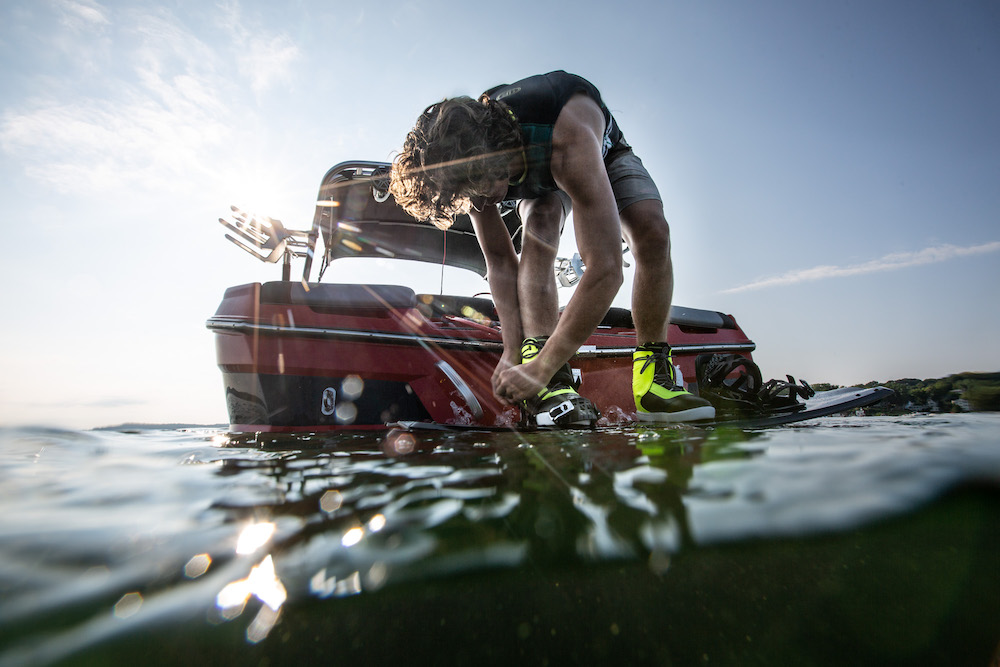
Wakesurfing uses a rope and a board without bindings. Done properly, you only need the rope to get up during a deep-water start. Wakeboarding uses a wakeboard rope, a board with wakeboard boots a wakeboard vest and the boat, which we’ll talk about in a bit. Because your feet are attached with wakeboard bindings, you can launch into the air and know full well that your feet are still going to be attached to the board when it comes time for landing that aerial move. The fixed bindings are also what can cause knee injuries in riders of a certain age. In wakeboarding, your feet are always on the board, and your hands are always on the rope handle.
Read Next: Wakesurfing: Tips on How to Get Started
You Might Also Like:
- All Things Watersports & Watersports Boats
- How to Kneeboard
- Boat Tubing Basics
- How to Buy a Boat for Watersports
- Watersports Safety Guide
Editor's Note: This article was originally published in June 2017 and updated in December 2019.