An echo sounder is an electronic device that measures how deep the water is beneath your boat. It does this with sound. These devices show you what’s between the surface and the bottom, including the seafloor, submerged structures, and schools of fish.
Boaters use echo sounders to avoid running aground, navigate unfamiliar water, and find fish. Many boats have one, whether it’s a standalone depth sounder or part of a fish finder.
What Is an Echo Sounder?
An echo sounder is a depth-measuring instrument that uses sound waves. It is also called a depth sounder. On large commercial vessels, it’s often called a fathometer because those ships measure depth in fathoms instead of feet.
These devices are a basic navigation tool. Knowing your water depth helps you avoid shallows, sandbars, and hazards.
How Does an Echo Sounder Work?
An echo sounder works by sending a sound pulse down through the water and timing how long the echo takes to return. The process has four steps:
- The transducer sends a pulse. The transducer is mounted on the hull or transom. It converts electrical energy into a sound pulse aimed at the bottom.
- The pulse travels through the water. Sound moves through water at a known speed, roughly 4,800 feet per second.
- The pulse bounces back. It reflects off the bottom, a wreck, or a school of fish and returns to the transducer.
- The unit calculates depth. It measures the round-trip time, divides it in half, and multiplies by the speed of sound. The result appears on the display.
Because the device knows how fast sound travels, even a tiny difference in return time translates into an accurate depth reading.
Main Parts of an Echo Sounder
- Transducer: sends the sound pulses and receives the echoes.
- Transceiver (processor): creates the electrical signal, times the echo, and turns it into depth data.
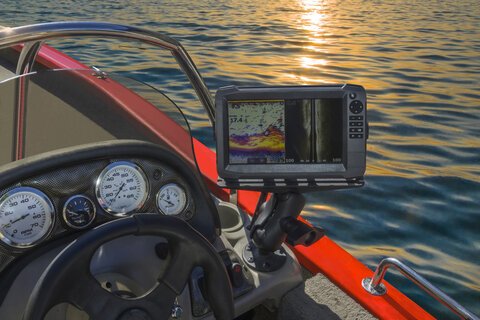
- Display: shows the results as a number, a graph, or a scrolling picture of the bottom.
The transducer’s mounting spot matters. A poorly placed transducer can pick up bubbles and turbulence, which cause false or jumpy readings.
Types of Echo Sounders
- Standalone depth sounders show depth and little else. They’re simple and affordable.
- Fish finders use the same principle but add detail. They show structure, bottom hardness, and fish arches.
- Chartplotter combos pair an echo sounder with GPS and charts on one screen.
A fish finder uses the same basic principles as the original echo sounder. It just displays far more information.
Read Next: Boat Navigation Accessories
Echo Sounder Frequency: Why It Matters
These devices send pulses at different frequencies, and each has strengths:
- Higher frequencies (around 200 kHz) give sharper detail in shallow water.
- Lower frequencies (around 50 kHz) reach deeper but show less detail.
Many echo sounders offer dual-frequency or CHIRP technology, which sweeps through a range of frequencies for clearer images.
What Can Echo Sounders Show You?
- Water depth beneath the boat
- Bottom contours, drop-offs, and ledges
- Underwater structure such as wrecks, reefs, and rock piles
- Schools of baitfish and individual fish
Read Next: Types of Fish and Where to Find Them
Tips for Using an Echo Sounder
- Mount the transducer where water flows smoothly beneath it.
- Check whether the depth reading is measured from the transducer, the waterline, or the keel. Many units let you set an offset.
- Adjust sensitivity (gain) if the screen looks cluttered or too empty.
- Expect weaker readings at high speeds, because turbulence can interfere with the signal.
Echo Sounder Q&A
Q: What is the difference between an echo sounder and a fish finder?
A: An echo sounder measures water depth. A fish finder uses the same technology but adds detail to show fish, structure, and bottom type. Many modern versions are actually fish finders with a depth readout.
Q: How accurate is an echo sounder?
A: Echo sounders are generally accurate. Accuracy depends on transducer placement, water conditions, and correct settings. Air bubbles, turbulence, and fast speeds can cause errors.
Q: Do I need an echo sounder on my boat?
A: It isn’t legally required on most recreational boats, but it’s a valuable safety tool. An echo sounder helps you avoid groundings and navigate shallow or unfamiliar water. It’s especially useful if you fish or boat in areas where depth changes quickly.
Originally published in March 2010. Updated in October 2026