Whether you own a 30-foot cruiser or a 150-foot superyacht, you often need a smaller vessel to bridge the gap between your boat and the shore. And in the boating world, you'll hear two terms used almost interchangeably: dinghies and tenders. However, although they serve a similar purpose, dinghies and tenders differ in design, propulsion, and use.
If you're looking to learn more about these types of boats, this guide will help you choose the right "utility" boat for your needs.
What is a Dinghy?
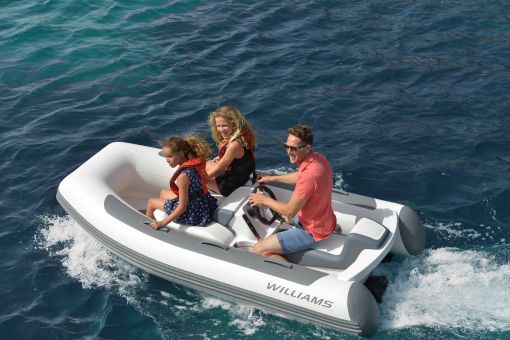
To define dinghies, think of them as the versatile "everyman" of the small boat world. A dinghy is a small boat (usually 7-12 feet) that's used for short-distance travel.
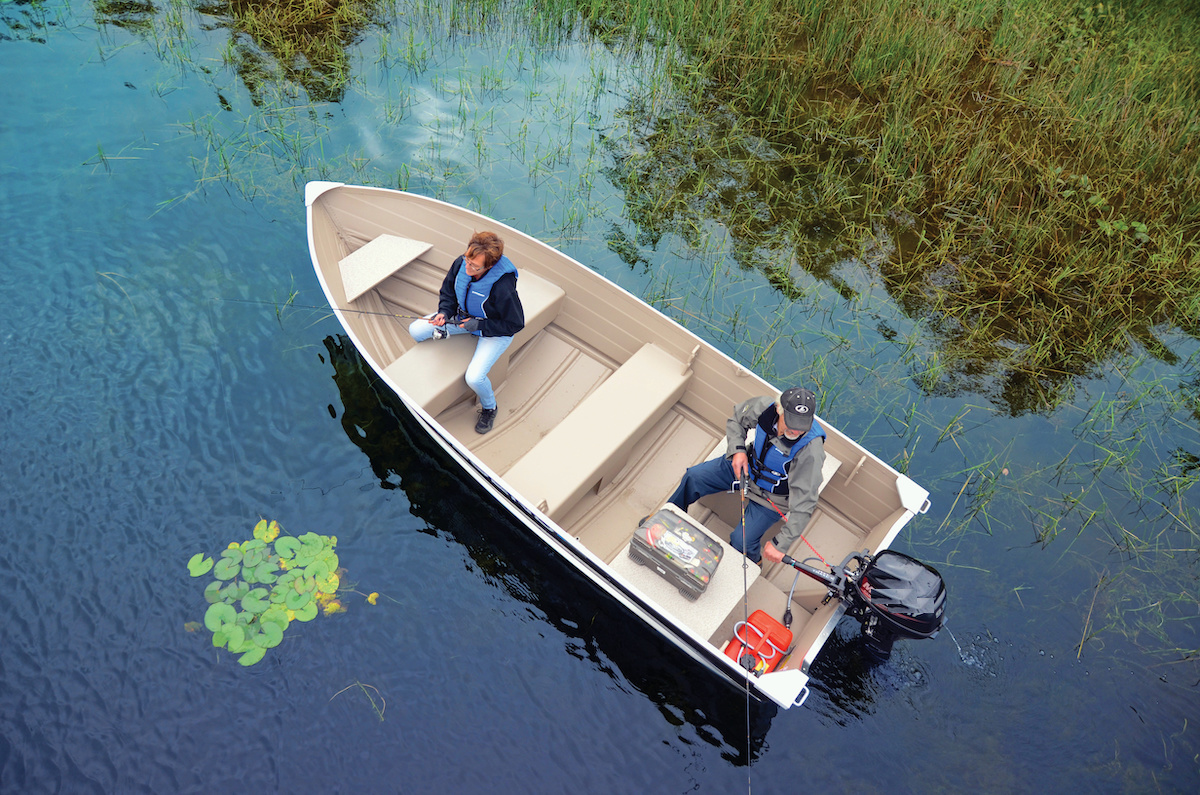
Dinghies are designed to be lightweight and easy to handle. They can be rowed, sailed, or powered by a small outboard motor. For many boaters, the dinghy is a vital tool for getting to the beach, exploring shallow water, or running errands while the "mother ship" remains at anchor.
What is a Tender Boat?
If you are wondering what a tender boat is, the answer lies in its relationship to a larger vessel. A tender is a boat that "tends" to the needs of a larger craft (often called the mother ship).
While a dinghy is technically a type of tender, the term yacht tenders usually refers to larger, more sophisticated vessels. These are often high-speed boats used to transport passengers in comfort over longer distances.
Although a dinghy might be a simple rowboat, a tender can be a luxury 20-foot craft with upholstered seating, built-in electronics, and powerful engines.
How are Dinghies and Tender Boats Different?
While the terms overlap, the differences usually come down to size, intent, and complexity:
- Size: Small dinghies are generally compact enough to be lifted onto a deck or towed easily. Tenders can be much larger—sometimes large enough to be considered standalone powerboats.
- Propulsion: Most cruising dinghies rely on oars or a 2-10 HP outboard motor. Tenders often feature powerful inboard or outboard engines capable of reaching high speeds to ferry guests from an offshore mooring to a marina.
- Intended Use: Dinghies are rugged and functional, often used for "dirty" work like carrying anchors or trash. Tenders are usually styled to match the aesthetic of larger boats and are used primarily for guest transport and recreation.
- Storage: Inflatable dinghies can often be deflated and stored in a locker. Large tenders usually require dedicated davits (cranes) on the mother ship or are towed behind during long-distance travel.
What are the Different Types of Dinghies?
Choosing the right model depends on your storage space and how you plan to use the boat. Here are the different types of dinghies:
- Inflatable Dinghies: These are the most popular dinghy choices for cruisers because they're lightweight and easy to store. Typically, they have a soft floor or an air-deck floor for added rigidity.
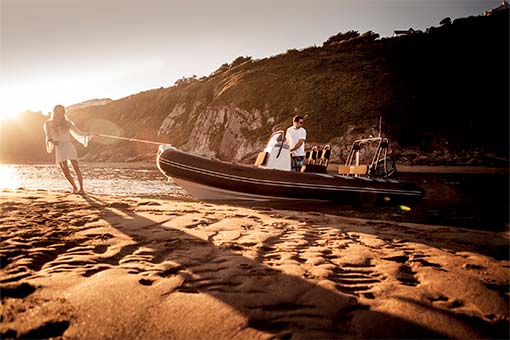
- Rigid-Hulled Inflatable Boats (RIBs): A RIB combines a solid fiberglass or aluminum hull with inflatable tubes. This makes them much more durable and stable in choppy water compared to fully inflatable boats.
- Rigid Dinghies: Often made of plastic, wood, or fiberglass, these rigid-hulled boats track well when rowed and are virtually indestructible, though they take up more deck space.
- Sailing Dinghies: A sailing dinghy is used primarily for recreation and learning the ropes of sailing. They feature a mast, sail, and centerboard.
- Racing Dinghies: These are specialized, lightweight boats built for speed and competition, rather than utility.
- Folding Dinghies: These boats have a collapsible hull made of flexible, heavy-duty materials or hinged panels. When they're not in use, they can fold down into a flat package (often no thicker than a surfboard) that can be lashed to a rail or stored in a locker.
- Nesting Dinghies: Nesting dinghies are rigid boats built in two or three sections. When it's time to stow them, the sections "nest" inside each other like Russian dolls.
Similar to folding dinghies, their compact design significantly reduces their footprint on deck—while maintaining the rowing and motoring performance of a traditional, hard-hulled boat.
What are the Best Uses for These Boats?
- Shore Access: If you need to get the dog to the beach, a small dinghy boat is your best bet.
- Guest Transport: For ferrying guests in formal attire without getting them wet, a high-sided yacht tender is essential.
- Exploration: Shallow water exploration is best done in a small dinghy that you can easily drag onto a sandbar.
- Watersports: Many large tenders are powerful enough to pull a tube or a wakeboarder, adding another layer of fun to the "big boat" experience.
What Are the Cost and Buying Considerations?
- Price Ranges: A basic inflatable can start around $1,000, while luxury yacht tenders can easily exceed $50,000.
- Durability: If you frequently land on rocky beaches, a rigid-hulled boat or an aluminum-bottom RIB is worth the extra investment.
- Compatibility: Ensure your larger vessels have the weight capacity and physical space (or davits) to carry the boat you choose.
- Maintenance: Inflatable boats require UV protectant to prevent the fabric from breaking down in the sun, while rigid boats require standard hull cleaning.
Dinghies and Tenders Q&A
Below are the answers to frequently asked questions about dinghies and tenders.
Q: What is a tender boat, and what is it used for?
A: A tender boat is a support vessel for a larger craft. Now, what is a tender boat used for? Its primary roles include transporting passengers, hauling supplies, and providing shore access when the leading boat is at anchor.
Q: How do dinghies and tenders differ?
A: While both serve the mother ship, dinghies and tenders differ in scale. A dinghy is typically a smaller, simpler craft used for short trips, while a tender is often larger, faster, and more luxurious.
Q: What are the different types of dinghies?
A: There are several different types of dinghies, including inflatable dinghies, rigid-hulled boats, RIBs (Rigid Inflatable Boats), sailing dinghies, specialized racing dinghies, folding dinghies, and nesting dinghies.
Originally published in March 2012. Updated in April 2026.