Whether you're enjoying a calm afternoon of fishing or cruising offshore swells, safety should always be your top priority. Accidents on the water happen quickly, and professional medical help may not be readily available. This is why a well-stocked marine aid kit is one of the most essential pieces of safety gear you can carry.
In this guide, we'll list what to put in a marine first aid kit, why it differs from a standard household kit, and additional safety items the Coast Guard requires.
Why is a first aid kit essential on a boat?
When you're on a boat, even minor injuries can be harder to deal with than they would be on land. Being prepared helps you handle common situations comfortably and confidently.
Having a marine first-aid kit can offer peace of mind. Having the right supplies on hand lets you treat common issues like motion sickness and minor cuts before they cut your trip short.
What differentiates a marine first aid kit from a household kit?
You might be tempted to grab the plastic first-aid box from your kitchen and toss it in a locker. However, marine environments require specialized safety equipment:
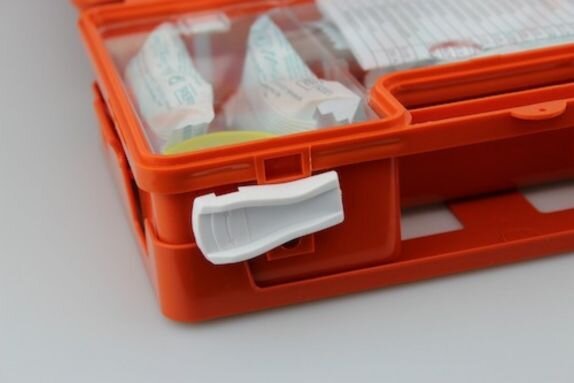
- Waterproof and Buoyant Packaging: A marine first aid kit must be packed in a waterproof container. Ideally, the kit should also be buoyant so it doesn't sink if dropped overboard during a crisis.
- Specialized Medical Supplies: Marine kits frequently include items rarely found in a house, such as high-dose motion sickness medication, vinegar for jellyfish stings, and heavy-duty waterproof tape that stays adhered even when soaked.
- Durability: Moisture and salt will quickly ruin standard bandages, and rust will soon ruin metal scissors found in household kits. Marine-grade tools are typically made of high-quality stainless steel to resist corrosion.
What should be in a boat's first aid kit?
When deciding what to include in a marine first aid kit, it's best to organize your supplies into categories.
Basic Supplies and Wound Care
- Bandages and Antiseptics: Pack waterproof adhesive bandages, sterile gauze pads, and antiseptics like alcohol wipes or iodine.
- Adhesive Tape: You'll need medical-grade, waterproof tape to secure dressings in a damp environment.
- Tools: Include stainless-steel tweezers (for splinters or fishhooks), blunt-nose scissors, and several pairs of nitrile gloves.
Injury-Specific Items
- Burn Care: High-quality burn cream or aloe vera gel is necessary for both sunburn and accidental contact with hot engine parts.
- Motion Sickness: Keep a supply of antihistamines or specialized motion sickness patches on hand.
- Eye Wash: Sterile saline solution is vital for flushing out salt water, fuel, or debris from a passenger's eyes.
- Emergency Basics: Cold packs, aspirin, and a space blanket to treat shock or hypothermia.
Considerations for Different Activities
- Fishing: Ensure your kit has wire cutters strong enough to cut through a heavy-duty fish hook.
- Offshore Sailing: For long-distance trips, your kit should include more advanced trauma supplies, such as a tourniquet and blood-clotting sponges.
How do you maintain and inspect your kit?
A first aid kit is only helpful if the supplies inside are ready for use. You should inspect your kit at the beginning of every boating season and after every major trip.
- Check Expiration Dates: Many items—including ointments, medications, and bandage adhesive—expire over time. Replace these annually to ensure they remain effective.
- Restock After Use: If you use a bandage or an antiseptic packet, replace it immediately upon returning to the dock so you aren't caught short next time.
- Inspect for Moisture: Even in a "waterproof" case, moisture can seep in. Check for signs of mold on fabric items or rust on metal tools.
What other safety items are required on a boat?
While the first aid kit handles medical needs, the Coast Guard requires several other pieces of safety gear to be on board at all times. Standards usually change depending on whether your rig is 16, 26, or 40 feet long.
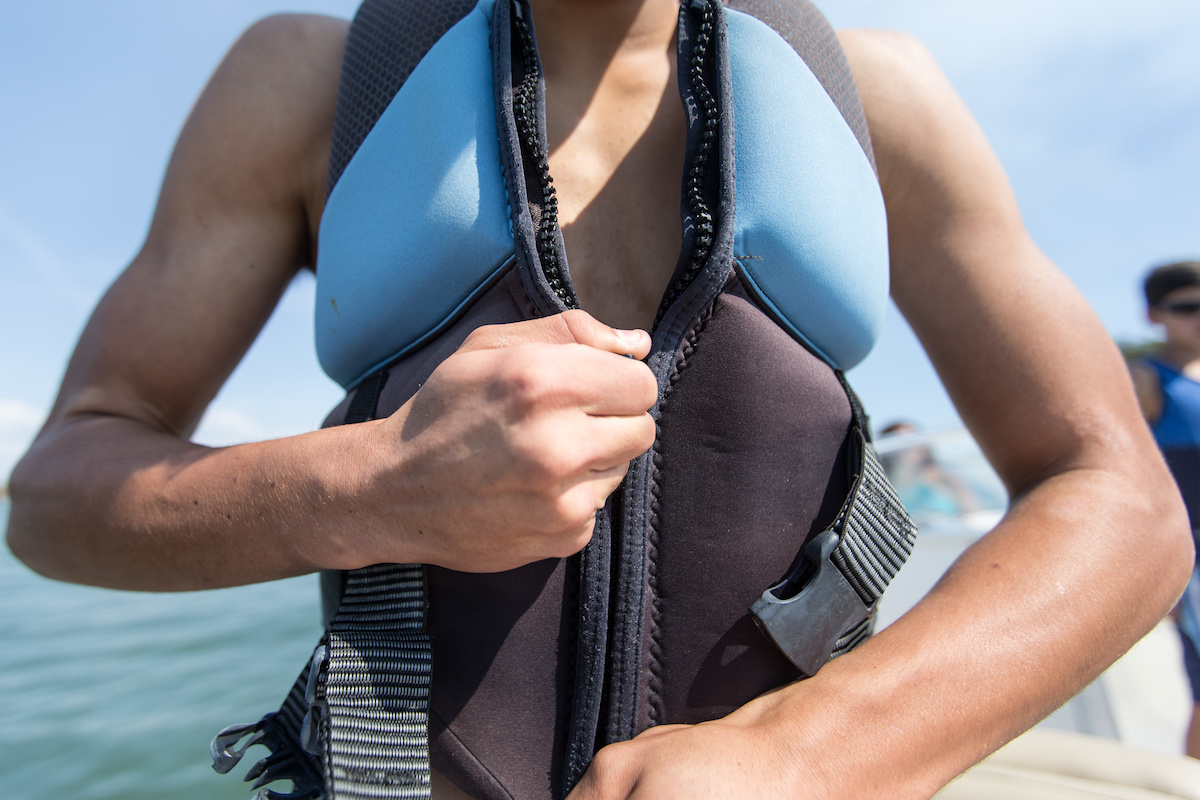
- Life Jackets: You must have one Coast Guard-approved life jacket for every person on board.
- Fire Extinguishers: Fire extinguishers are legally required on all motorized vessels. For example, boats under 26 feet require at least one B-1 type extinguisher.
- Visual Distress Signals: Vessels require a minimum of three-day-use and three-night-use pyrotechnic devices (flares). An electronic SOS signal light can often be substituted for night use.
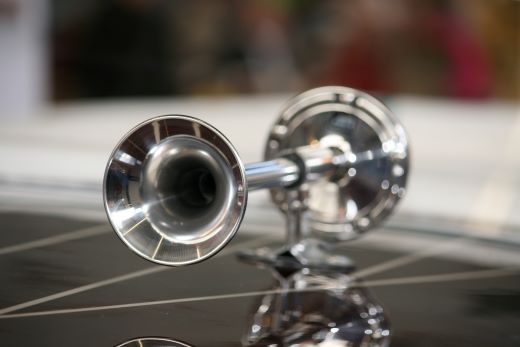
- Sound-producing devices: An air horn or whistle is required to signal other vessels in low visibility.
- VHF Radio: While not always required for small boats, a VHF radio is more reliable than a cellphone.
- Navigation Lights: Ensure your navigation lights are operational at all times when on the water between sunset and sunrise.
Watch Next: Boat Capacity and Carriage Requirements
Boat First Aid Q&A
Q: Is a first aid kit required on a boat?
A: While a first aid kit isn't always legally required for recreational vessels, it is considered essential safety equipment by the Coast Guard. Many states have specific requirements, so it's always best to carry one for peace of mind.
Q: What safety items are required on a boat?
A: The Coast Guard requires several pieces of safety equipment, including Coast Guard-approved life jackets, fire extinguishers, sound-producing devices, and visual distress signals. But of course, the exact requirements depend on the boat's length.
Q: What should you put in a marine first aid kit?
A: Include bandages, antiseptics, waterproof tape, gauze, motion sickness medication, burn cream, and tools like scissors and tweezers. Also, make sure all items are kept in a waterproof, buoyant container designed for the marine environment.
This article was originally published in July 2013 and updated in April 2026.