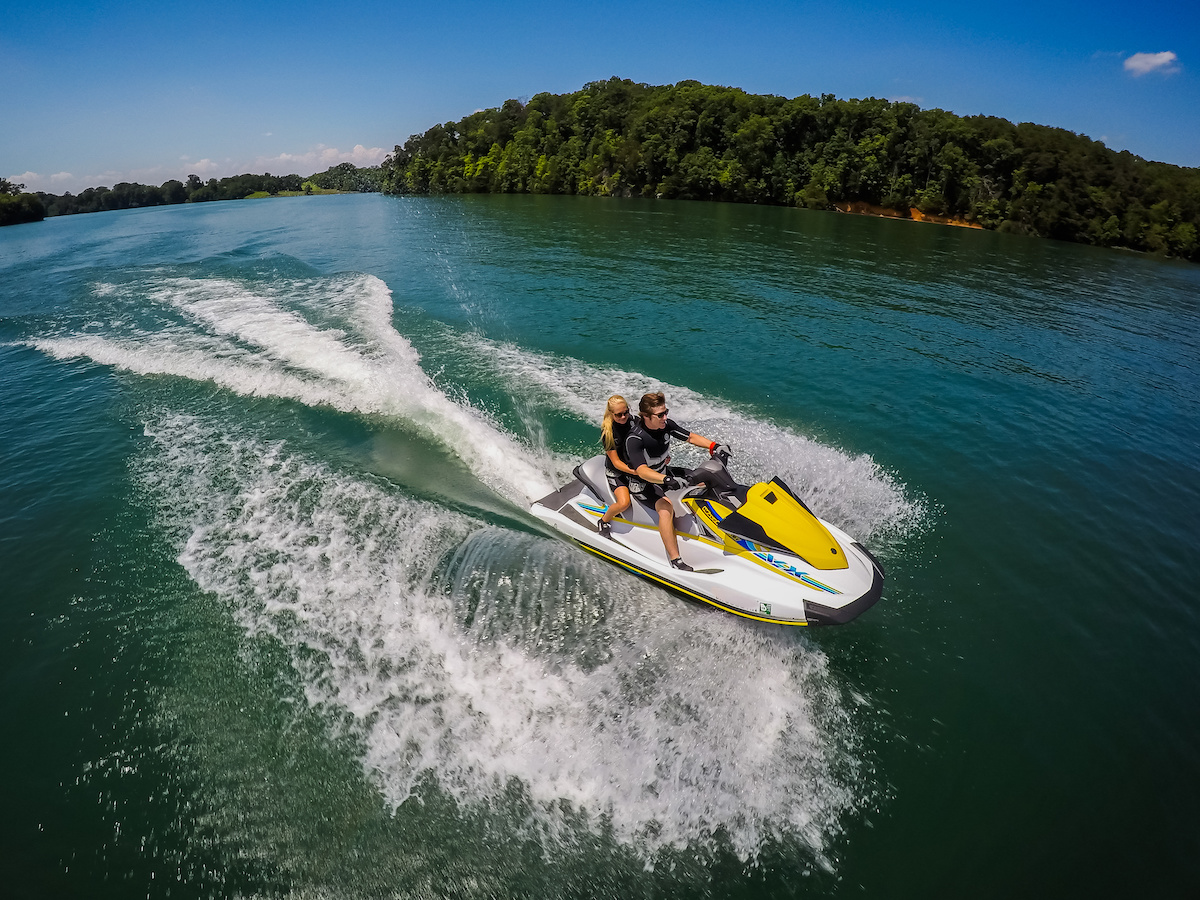
Personal watercraft (PWC) are subject to state boating laws and additional rules designed to help keep operators, passengers, and other boaters safe.
Before heading out on a personal watercraft, make sure you understand the rules for the state and waterway where you plan to ride.
What Are the Most Common Personal Watercraft Laws?
Although requirements vary by state, PWC operators should be familiar with several common rules:
- Minimum operator age: States set minimum ages for operating a PWC, and some allow younger operators to ride if they meet education or adult-supervision requirements.
- Boater education: Many states require certain operators to complete an approved boating safety course or carry a boating safety certificate.
- Life jackets: Operators and passengers generally must wear a U.S. Coast Guard-approved personal flotation device (PFD) while riding a PWC.
- Nighttime operation: Many states prohibit PWC operation after sunset or during periods of reduced visibility.
- Safe operation: Rules may prohibit reckless maneuvers, unsafe wake jumping, operating too close to other vessels or swimmers, and creating hazardous wakes.
- Restricted waterways: Some lakes, rivers, canals, conservation areas, and other waterways prohibit or limit PWC use.
PWC Laws by State
The following state-by-state directory is intended to help you find the rules that apply where you plan to ride. Requirements should be confirmed with the relevant state boating authority before operating a PWC.
Alabama
Alabama has specific PWC operator-age and boating safety requirements. Operators must follow applicable rules for life jackets, engine cutoff switches, safe operation, and restricted waters.
Alaska
Alaska's PWC requirements include general boating safety rules and restrictions that may apply in certain state parks, protected waters, and other designated areas.
Arizona
Arizona regulates PWC operation, including operator age, required safety equipment, nighttime use, and safe operation near other vessels.
Arkansas
Arkansas has PWC-specific requirements for operator age, boating safety education, safety equipment, and nighttime operation. Some waterways may have additional restrictions.
California
California has PWC-specific operating requirements, including restrictions on nighttime use, safe operation near other vessels, and applicable boating safety and equipment laws. Local authorities may impose additional restrictions.
Colorado
Colorado regulates PWC operator age, boating safety education for certain younger operators, required equipment, and safe operation. Restrictions may also depend on the lake or reservoir.
Connecticut
Connecticut requires operators to follow state boating safety requirements and PWC-specific operating restrictions, including applicable nighttime and visibility rules.
Delaware
Delaware has boating education and equipment requirements that apply to PWC operators, along with restrictions on nighttime operation and unsafe maneuvers.
District of Columbia
PWC operators in the District of Columbia must comply with applicable boating safety, registration, equipment, and operating requirements.
Florida
Florida prohibits children under 14 from operating a PWC. Operators must comply with boating safety requirements, wear approved life jackets, use an engine cutoff switch when required, and observe nighttime and safe-operation restrictions. Additional requirements apply to rented PWCs.
Georgia
Georgia regulates minimum operator age, boating safety education for applicable operators, required equipment, and safe operation of personal watercraft.
Hawaii
Hawaii has PWC-specific rules and restrictions in certain state-managed waters, conservation districts, and other designated areas. Check local requirements before launching.
Idaho
Idaho PWC operators must follow applicable boating safety, equipment, and operating requirements. County ordinances and local waterway rules may also restrict use.
Illinois
Illinois has boating safety education requirements that may apply based on operator age and other circumstances. PWC operators must also follow equipment, nighttime, and safe-operation rules.
Indiana
Indiana regulates PWC operator age and applicable identification and boating safety education requirements. Operators must also comply with state rules for equipment and safe operation.
Iowa
Iowa has age-based boating safety education requirements and operating restrictions for personal watercraft, including nighttime-use rules.
Kansas
Kansas regulates PWC operator age, boating safety education for certain operators, required safety equipment, and safe operation. Restrictions may also apply on individual lakes.
Kentucky
Kentucky has age-based boating education requirements and rules for operating a PWC safely, including applicable nighttime and equipment restrictions.
Louisiana
Louisiana has PWC-specific minimum-age and boating education requirements, as well as restrictions on nighttime operation and unsafe maneuvers.
Maine
Maine regulates PWC operator age, boating safety education in applicable circumstances, and nighttime operation. Some lakes and other inland waters prohibit or restrict PWC use.
Maryland
Maryland has PWC operator-age and boating safety requirements, along with restrictions on nighttime operation and unsafe operation near other vessels. Some waterways have additional rules.
Massachusetts
Massachusetts has PWC-specific operator-age, boating safety education, equipment, and operating requirements. Rules may differ for younger operators.
Michigan
Michigan regulates PWC operator age, boating safety certification for applicable operators, equipment, and operating hours. Special rules may apply to younger operators and rental watercraft.
Minnesota
Minnesota has PWC-specific operator-age, boating safety education, equipment, and operating-hour requirements. Operators should also check for restrictions on individual waterways.
Mississippi
Mississippi regulates PWC operation, including applicable operator-age, boating safety education, equipment, and safe-operation requirements.
Missouri
Missouri has boating safety education requirements for certain operators and PWC-specific rules concerning safe operation, required equipment, and nighttime use.
Montana
Montana regulates PWC operation through state boating safety and equipment laws. Operators should confirm applicable age, certification, and lighting requirements before riding.
Nebraska
Nebraska has boating safety education and operating requirements that apply to personal watercraft. Check state rules for applicable age, certification, and nighttime restrictions.
Nevada
Nevada regulates PWC operator age, boating safety education for applicable operators, required equipment, and safe operation. Local restrictions may also apply.
New Hampshire
New Hampshire has PWC-specific operator-age, boating education, and operating requirements. Some lakes and ponds prohibit PWC use, including certain waters with specific statutory restrictions.
New Jersey
New Jersey requires applicable boating safety credentials and licenses for PWC operators. Rules differ depending on where the watercraft is operated, and certain canals have PWC access restrictions. Operators should verify minimum-age, nighttime, equipment, and safety requirements before riding.
New Mexico
New Mexico regulates PWC operation through boating safety, age, equipment, and safe-operation laws. Operators should check applicable certification and local waterway requirements.
New York
New York has boating safety education requirements that apply to operators under its phased-in boater education law. Local authorities may also restrict or prohibit PWC use on certain waterways.
North Carolina
North Carolina regulates PWC operator age, boating safety certification for applicable operators, and safe operation. Additional rules may apply near docks, swimmers, moored vessels, and other watercraft.
North Dakota
North Dakota has boating safety education requirements for applicable operators and rules governing PWC equipment and safe operation.
Ohio
Ohio regulates PWC operator age, boating safety education for applicable operators, equipment, and safe operation. Confirm current requirements before operating.
Oklahoma
Oklahoma has PWC operator-age and boating safety requirements, along with rules covering required equipment and safe operation.
Oregon
Oregon regulates PWC operator age and boating safety education, with additional restrictions that may apply to rivers and other waterways. Operators must comply with applicable equipment and operating-hour requirements.
Pennsylvania
Pennsylvania requires all PWC operators to carry a valid Boating Safety Education Certificate. Operators must be at least 12 years old, and additional restrictions apply to younger operators, passengers, and rented PWCs. PWC operation is prohibited from sunset to sunrise.
Rhode Island
Rhode Island has PWC operator-age, boating safety, and equipment requirements. Cities and towns may regulate or prohibit PWC operation in their waters.
South Carolina
South Carolina has age-based PWC and boating safety education requirements. Operators must follow applicable equipment, nighttime, and safe-operation laws.
South Dakota
South Dakota regulates PWC operation through boating safety education, age, equipment, and safe-operation requirements.
Tennessee
Tennessee has boating safety education requirements based on operator age and date of birth, along with rules for PWC operation and required equipment.
Texas
Texas has PWC-specific operator-age and boating safety education requirements. Operators must follow rules governing nighttime use, safe distances from other vessels and people, required equipment, and reckless wake jumping.
Utah
Utah regulates PWC operator age and boating safety education for applicable younger operators. Additional equipment and operating restrictions may apply.
Vermont
Vermont has boating safety education and age requirements, as well as restrictions on certain waters. Confirm that personal watercraft are permitted on your intended lake or waterway.
Virginia
Virginia generally requires PWC operators to be at least 16 years old, with an exception for qualifying 14- and 15-year-olds who complete an approved boating safety course and carry proof of completion. Operators must also comply with life jacket and other PWC-specific rules.
Washington
Washington has PWC operator-age, boating safety education, and equipment requirements. Restrictions may apply on certain rivers, lakes, and other waterways.
West Virginia
West Virginia regulates PWC operator age, boating safety education for applicable operators, required equipment, and operating hours.
Wisconsin
Wisconsin has PWC-specific age and boating safety education requirements, as well as restrictions on operating hours, equipment, and safe operation.
Wyoming
Wyoming regulates PWC operation through state boating safety and equipment requirements. Some lakes prohibit or restrict PWC use, so check local rules before launching.
PWC Regulations by State Q&A
Q: How can I check the current PWC laws in my state?
A: PWC regulations vary by state and can change over time. Before riding, research rules for your specific waterway. Consult the U.S. Coast Guard's State Boating Laws and your state's official boating authority for current requirements.
Q: How old do you have to be to drive a Jet Ski?
A: The minimum age to operate a jet ski (personal watercraft) varies by state. Check your state's boating regulations before riding.
Q: Do you need a boating license to drive a personal watercraft?
A: Requirements vary by state. Some states require a boating safety education certificate, while others have age-based education requirements or additional licensing rules for PWC operators.
Originally published in February 2015. Updated in October 2026.