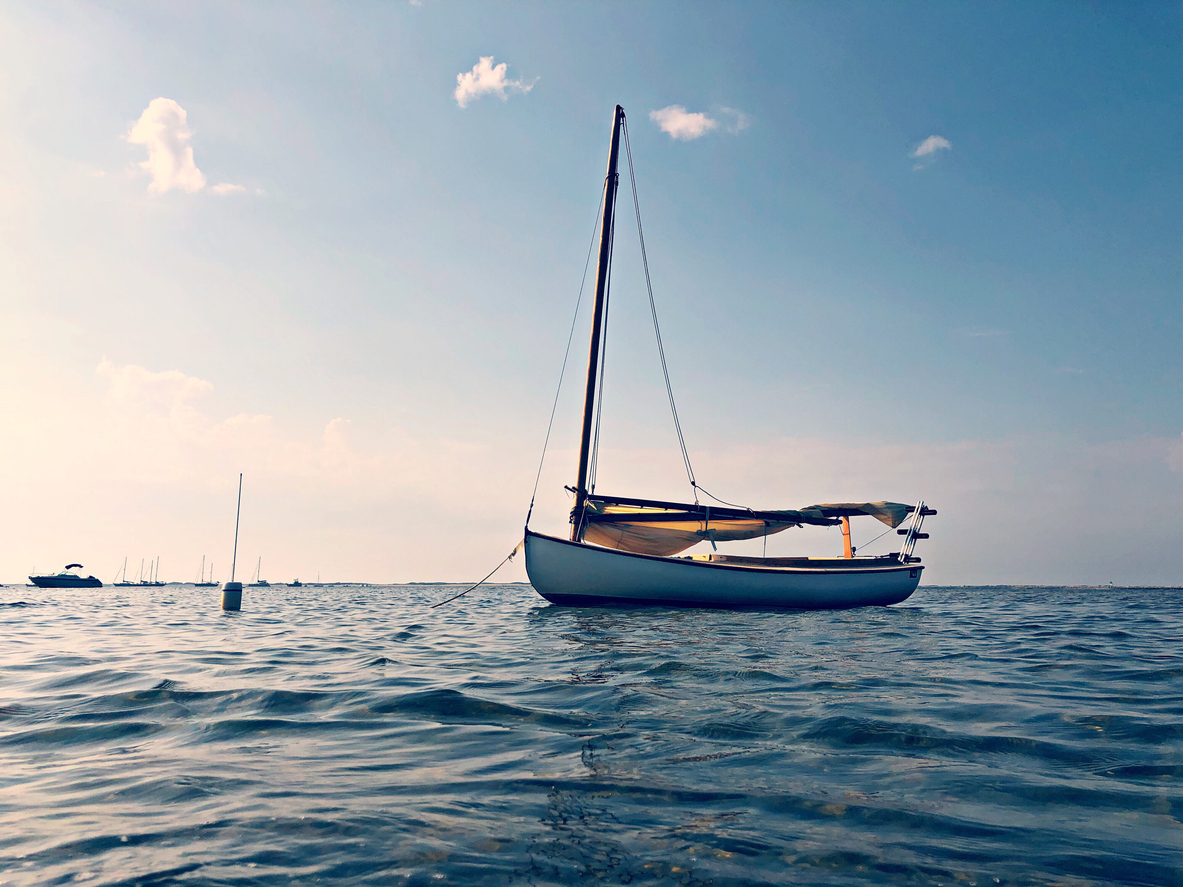
Like most things, learning to sail can be relatively easy, but learning to master the art of sailing can take a lifetime. Sailing is a mix of specific knowledge, honed skills and a gut instinct for the wind and the feel of the boat. To get the basics, expect to learn on many levels (and be sure to explore the different types of sailboats that are available).
Beginner Sailing: Vocabulary
Sailing has its own glossary of terms that you’ll need to know. You’ll hear words and expressions like port, starboard, leeward, halyard, helms alee, rode, tacking, gybing, eye of the wind, velocity made good and course over ground, just to name a few. Familiarize yourself with them before ever setting foot on a boat and you’ll be ahead of the game.
Read 10 Nautical & Sailing Terms to Know
Points of Sail
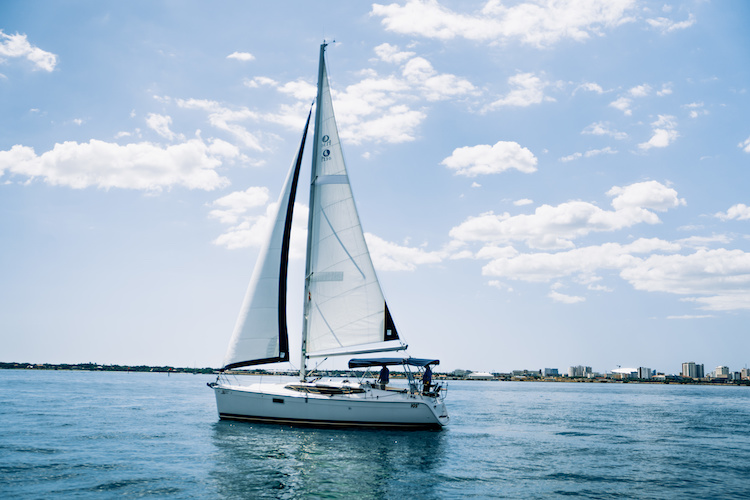
These are basically the directions a sailboat can and cannot maneuver and the accompanying sail positions that make it happen. Terms such as beam, broad and close reach describe at which angle the wind is contacting the boat and therefore how to adjust the sails for peak performance. You’ll learn that with the wind straight on the bow, you may end up “in irons”, which is the no go zone.
Parts of the Boat
Learn the unique parts of a boat so you’ll know what to touch, look at or do when the instructor in your first class gives you a directive. For example, understanding “ease the jib sheet” or “luff the main” could save you from getting very wet on your first day. Boat parts have unique names like vang, downhaul, mizzen, centerboard, boltrope, the luff and leech of a sail, and so forth. Once you learn that there are no ropes on a boat (only “lines”), you’ll sound like a pro too.
Sailing Videos, Online Classes, Sailing Schools
Instructional videos on YouTube or other sources will help you connect the terminology with the reality. The first day on a sailboat can be overwhelming so the more you know beforehand, the less stressed you’ll be.
You can learn to sail without lessons, but professional instruction will make it a lot faster and you’ll learn the right way to do things. Start on a small boat where the equipment is simple and cause-and-effect is clear because your actions provide immediate feedback. Beginning on a tiller (rather than a wheel) boat usually creates sailors who are more in tune with a vessel later on. The first day of class, you’ll learn to “rig” (put together) the boat, basic maneuvering (tacking, gybing and docking) and baseline safety issues.
To learn more, be sure to read What to Expect From a Sailing School.
Knot Tying
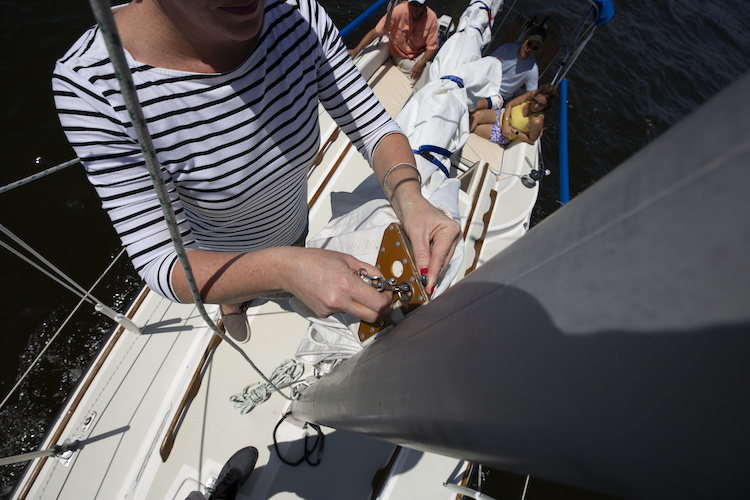
There are many “lines” on a boat and therefore many knots in use. Knowing how to tie at least a handful of them will help you manage the boat better and that includes knowing how to tie on fenders and attaching a line to a cleat once you’re at the dock. Knot tying is an activity you can perfect in your spare time when not on the water.
Sail Trim
Sailing well is all about sail trim, which is the way the sails are used and shaped. Easing (letting out) and trimming (hauling in) the sails will make a big difference in how you sail. When sailing upwind, you’ll want the sails tight or flat but when sailing down or off the wind, you’ll want them to be curved and full to catch as much air (wind) as possible.
The basic theory is clear-cut but the application of that knowledge can take years to perfect. You’ll soon learn to use telltales (strings of yarn attached to the jib and mainsail) to help you see what the apparent wind is doing and how to use it to your advantage. Sails are airfoils and sailing is about geometry and physics. Although you don’t need to be a mathematician or physicist to sail, understating concepts like the “centers of effort and lateral resistance” will help the pieces of the puzzle fall into place.
Rules of the Road
Finally, you’ll need to know how to interact with other boat traffic on the water. Understanding who is under obligation to move will help you avoid a collision. Those with the right of way are called the “stand-on” vessel while the others are the “give way” vessel. The rules are based on the type of boat (sail, power or human propelled), the location of the interaction (restricted channels or open water) and the activity the boats are involved in at the point of potential encounter (like sailing, fishing or towing). Regardless of the rules, the objective is to avoid a collision at all costs so you should never insist on your rights regardless of the circumstances.
Start with the basics by reading Boating Etiquette: Reading Between "The Rules."
Learning to sail is just the beginning of a lifetime of enjoyment, especially if you’re bitten by the sailing bug so enjoy the process from the rudimentary basics to the subtle nuances that will make you an expert.
Interested in learning more about sailing? Read:
- Beginner Sailing Tips
- Sailing Basics: 10 Nautical & Sailing Terms to Know
- Why Learn to Sail? Reasons to Learn Sailing
- Explore Sailboat Types