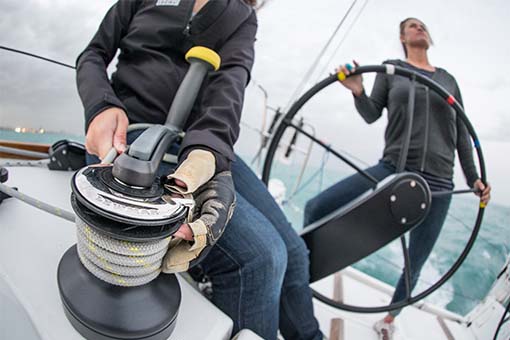
If you’re new to sailing, get excited because this exhilarating hobby is sure to leave you with memories that last a lifetime. As a bonus, it can improve your physical and mental well-being.
To help you start on the right foot, we’ve created this handy guide, complete with sailing tips for newbies like yourself. Even if you have some experience on a sailboat, you’ll find our sailing tips for beginners to be an excellent refresher. So, without further ado, here they are:
- Register for a Sailing Course
- Understand the Parts of a Sailboat
- Improve Your Steering Skills
- Develop Wind Awareness
- Prepare for Your Outings
- Be Aware of Your Surroundings
- Practice, Practice, Practice
- Sail With a Friend
- Join a Sailing Club or Organization
- Maintain a Sailing Log
- Never Stop Learning
What are the Best Sailing Tips for Beginners?
1. Register for a Sailing Course
A sailing course can be a great way to get up to speed on sailing basics. Regardless of whether you take it in-person or online, expect seasoned, certified instructors who will teach you the ins and outs of handling a sailboat. While every course is unique, almost all of them focus on safety and include a hands-on component where you can actually practice your skills before heading out on the water.
2. Understand the Parts of the Sailboat
Take the time to learn the parts of a sailboat, as each plays a unique role in the sailing experience. The mast, for example, is a vertical pole that supports the sails. The shackle is the metal, U-shaped fitting that keeps all the parts of a sail together. Sailboats are also equipped with steering components, such as the centerboard and rudder, that prevent the vessel from tipping over. Check out our blog post for a complete breakdown of sailing parts.
What Are the Parts of a Sailboat?
3. Improve Your Steering Skills
The key to steering a sailboat safely is smooth, controlled motions that can help maintain balance. Use the tiller or wheel to avoid sudden turns. It’s also essential to adjust the mainsail and jib so that you can harness the wind efficiently, no matter the wind conditions. Be sure to practice turning the boat through the wind (tacking) and away from it (jibing) in calm conditions first.
4. Develop Wind Awareness
Sailboat safety and wind awareness go hand in hand. Before you set sail, always check the direction of the wind. You should also teach yourself how to recognize changing wind conditions and make quick adjustments to ensure stability. Whatever you do, use the wind to your advantage. After all, sailing is based on the idea of reading wind and responding to its patterns.
5. Prepare for Your Outings
A properly-fitted life jacket is essential to wear on a sailboat, even after you become a pro and feel confident on the water. Also, check the weather before you embark on your adventure. Speaking of weather, dress in layers as it can get chilly even when the sun is shining.
Reschedule your trip if there are strong winds, storms, or other severe weather. In addition, it’s wise to invest in a marine radio that can help you get through unforeseen situations and emergencies.
6. Be Aware of Your Surroundings
In a perfect world, you wouldn’t have to worry about other vessels and obstacles. The reality, however, is that situational awareness and staying alert are crucial for safe sailing. Keep an eye out for other boats, swimmers, and unexpected debris. Conditions can change in a second, impairing your visibility and course. Always look ahead, behind you, and to both sides.

7. Practice, Practice, Practice
Rome wasn’t built in a day, and the best sailors weren’t either. Realize that sailing is a skill you’ll need to develop over time. While it might be tempting to rush the learning process, doing so can lead to false confidence and disappointment down the road. Pace yourself. Even short outings may help you improve your skills. As long as you’re committed and motivated, you’ll get there in time.
8. Sail with a Friend
When you initially start your sailing journey, bring a friend or family member along. Ideally, they’d have at least some sailing experience to give you pointers and help build your confidence. If you don’t know anyone who has spent sufficient time on a sailboat, ask your network. There’s a good chance that a friend of a friend loves to sail and would love to take you under their wing.
9. Join a Sailing Club or Organization
While this isn’t necessary, being part of a sailing club or organization can give you a leg up as a novice sailor. You’ll surround yourself with friendly, experienced sailors, many of whom may be open to being your mentor. Plus, you can attend group sails and social activities to further your skills and experience.
10. Maintain a Sailing Log
A sailing log is an effective way to keep tabs on your progress and identify areas you can improve. After every outing on a sailboat, jot down the wind conditions, the maneuvers you practiced, and most importantly, the lessons you learned. Look back at your log every few weeks or so. Celebrate your wins while also noting what you need to change.
11. Never Stop Learning
Learning never ends, even after you’ve sailed for decades. Once you become confident, continue to improve your skills. Don’t hesitate to sign up for a sailing course every once in a while and be open to tips from other sailors you meet. After all, knowledge is power, and you can never be too confident on the water.
Welcome to the Wonderful World of Sailing
Sailing is an exhilarating hobby that can do wonders for your physical and mental health. Although it’ll take some time to master it, once you do, you’ll be thrilled you put in all the time and effort. You’ll open the doors to countless opportunities for memorable adventures on the water.
Originally published in March 2011. Updated in November 2025.