They say you always remember your first love. You always remember your first sail, too. What will yours be like? Here’s what happens during a typical sail.
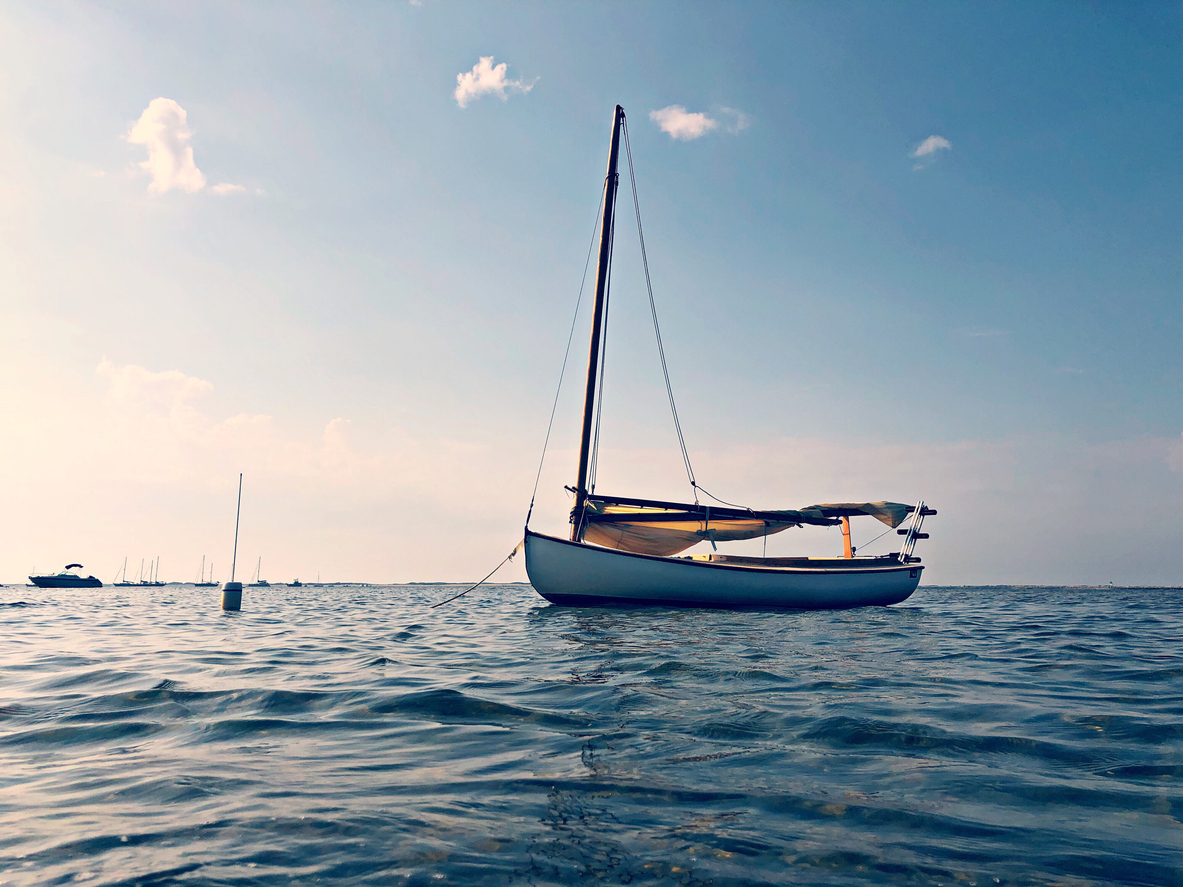
Chances are, the boat will be on a mooring, a heavy, permanent anchor. Boats on moorings point into the wind, ideal for hoisting sails. The mainsail is first: It’ll go up easily almost all the way, but the last foot or two will take some pulling. Now the boom—the horizontal spar attached to the mast that holds the foot, or bottom, of the mainsail—will be swinging side-to-side as the sail “luffs,” or flaps about like a flag. That’s OK; just keep your head out of the way. If it’s windy, it’ll be a little bit noisy, too.
- The jib, the triangular sail ahead of the mast, goes up next, but it’s easier to hoist than the mainsail. It will flap around, too, but doesn’t have anything hard attached to it, so the person sent to the bow to cast off—release—the mooring line won’t have to worry about getting conked.
- When the mooring is released, the boat will start to drift backwards. Pulling the jib out to one side of the boat will cause the wind to push the bow towards the opposite side. Once the bow swings about 45 degrees away from the wind, it’s time to trim (adjust) the mainsail until it stops flapping and fills with wind. At the same time, another crew will trim the jib. As both sails fill, the boat starts to move, silently—it’ll seem like magic.
- The helmsman will steer clear of other boats on nearby moorings; as he does, the sails will need more adjustment in or out as he changes course. If the wind is brisk, the boat will “heel” (lean) over a bit, and it’ll feel like you’re going really fast. Once in open water, the skipper will set a course, the helmsman will steer a straight line (this takes practice) and the crew will trim the sails again. (Trimming sails is a constant process.)
- Now you’ll steer, trim, practice maneuvers, maybe learn how to pick up a man overboard, using a buoy as the “victim.” In an hour or so things will be familiar, you’ll stop being baffled and start having fun. Your skills will grow quickly. When it’s time to sail back to the mooring, you’ll wish you could stay out longer, and will look forward to your next lesson. You’re on your way to becoming a sailor.