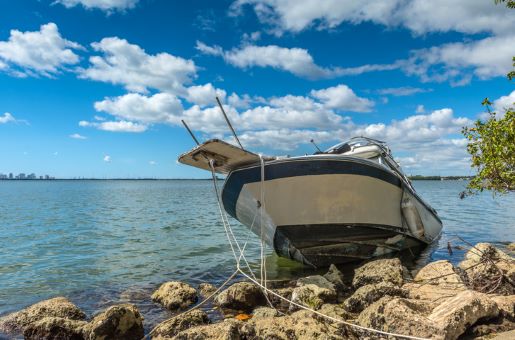
If you sail a dinghy, high-performance centerboarder, boardsailer or other unballasted boat, you will capsize sooner or later, probably sooner. It’s just a characteristic of these boats, and folks who sail them learn to right them quickly without much fuss. In fact, it’s part of the fun, and once you become more skilled you might want to try a boat like this. But this isn’t the kind of boat for learning to sail— for that, you want a keelboat.
Keelboats have lots of ballast to keep them right-side-up in all but hurricane conditions, and maybe even then. Yes, all sailboats “heel” (lean over) in strong winds, sometimes so far that waves wash onto the deck. It’s just part of sailing, and one that many sailors enjoy the most. But when it comes to capsizing, keelboats have physics on their side.
First, as the boat heels, the wind pressure on the sails decreases because the sails present a smaller area to the wind. Imagine you’re standing in a windswept field holding a piece of plywood: If you try to hold the plywood straight up, the wind will blow it away, but if you lean it at a 45-degree angle, the pressure will be much less. The same thing happens with sails, and the farther the boat heels, the less pressure there is.
Second, the ballast is located in the keel, several feet below the waterline, so as the boat heels its leverage becomes greater. Imagine you’re holding a dumbbell in your hand, your arm hanging straight down from your shoulder. Now lift the dumbbell away from your body, keeping your arm straight— it gets heavier the closer your arm gets to horizontal, doesn’t it? That’s how ballast works when the boat heels.
Combine these two effects— sails producing less heeling moment, ballast producing more righting moment as the boat heels— and you’ll see that it’s very, very unlikely you’ll capsize in a keelboat. At first you won’t believe this, when you feel the boat heel farther and farther and water washes into the cockpit, but just give it a chance. It’s physics. It works. And it’s on your side.
Related Articles

While our glossary page provides a comprehensive list of boating terms, we’ve also compiled this short list of 10 beginner sailing terms that everyone should know.…
Continue reading »

New to sailing? Let us help you master the basics with these handy sailing tips and instructions for beginners. Both novice and experienced boaters alike can benefit from a quick review of these begin…
Continue reading »

Learning the basics of sailing is easy, but becoming truly expert can take years. There’s always something more to learn, and once you catch the sailing bug you’ll want to learn it all. …
Continue reading »

Boating is affordable and there’s a boat for every age, lifestyle and budget.
Most people don’t realize how affordable boating is: in some instances, you can buy a brand new boat financed for around…
Continue reading »

Mastering sailing basics means being familiar with essential right-of-way sailing rules. One thing to remember is that there are different right-of-way sailing instructions for sailboats as opposed to…
Continue reading »

Plan ahead… There are a lot of choices. Allow enough time to explore many different types of boats, and several different brands within each category… This is a big investment that will change your li…
Continue reading »

If your destination lies upwind, how do you sail there? Unless the wind is blowing from directly astern (over the back of the boat), the sails propel the boat forward because of “lift” created by wind…
Continue reading »

Sails work by “catching the wind” only when the boat is sailing directly downwind. The rest of the time a sail is essentially an airplane wing standing on end, and works the same way: When properly tr…
Continue reading »